
VR safety training for chemicals.
Containment, confined-space and emergency-response drills for chemical processing.
VR safety training for chemicals
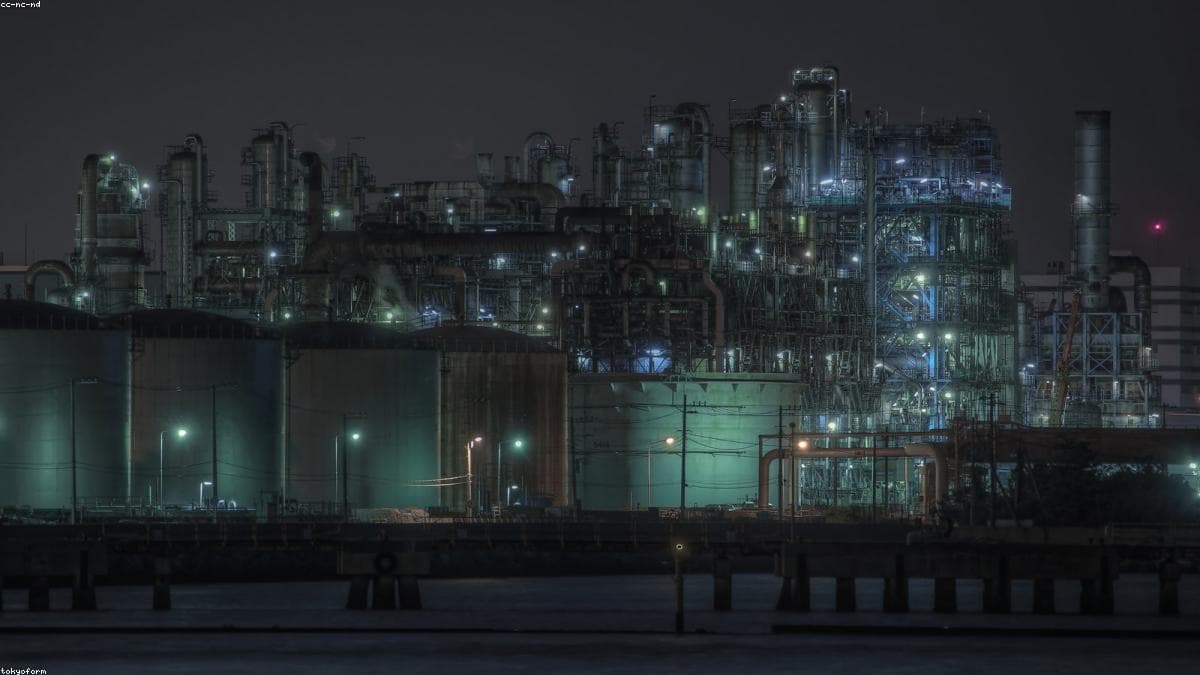
India's chemicals sector — bulk and specialty chemicals, agrochemicals, dyes and intermediates — operates reactors, distillation columns and large hazardous-inventory storage, with many sites classified as Major Accident Hazard (MAH) units. These are process-safety environments where exothermic reactions, toxic and flammable inventories and pressurised systems mean that a single loss of containment or runaway reaction can endanger not only the workforce but neighbouring communities, placing them under intense regulatory and public scrutiny.
Training is critical and uniquely constrained because the defining scenarios — a toxic release, a runaway reaction, a confined-space entry into a reactor — can never be staged live without creating the hazard itself. DrillXR provides assessable VR drills that reproduce containment, confined-space and emergency-response scenarios faithfully and score each step, so a plant can prove its crews will identify a substance, don the right PPE, contain a release and execute a coordinated emergency response correctly — the precise capabilities that MAH-unit safety regimes demand evidence of.
The risks driving chemicals training
Chemical-sector failure modes are process-safety driven and high-consequence. Toxic release — loss of containment of a hazardous substance — threatens workers on site and populations beyond the fence line, and demands instant correct PPE, containment and reporting. Runaway reactions, where exothermic processes exceed control, can rupture vessels and trigger fire or explosion. Confined-space entry into reactors, vessels and sumps combines toxic-atmosphere, residual-chemical and entrapment hazards. Fire and explosion from flammable inventories complete the profile. Each of these escalates in seconds and turns entirely on whether trained crews execute the right procedure under acute stress.
How DrillXR fits chemicals
DrillXR's priority modules for chemicals map directly to these hazards: Chemical & Spill Response for SDS-based identification, PPE selection, containment, decontamination and reporting; Confined Space Entry for reactor and vessel work with atmospheric testing and standby rescue; the multiplayer Emergency Mock Drill for coordinated, timed on-site emergency response; and Fire & Evacuation for fire and explosion scenarios. Every drill scores the worker step by step and certifies on completion, and the multiplayer emergency module lets a crew rehearse incident command, communications and personnel accounting together — the coordination that MAH-unit on-site emergency plans require and that individual training cannot deliver.
Compliance & audit readiness
Chemical-sector safety is governed by the Manufacture, Storage and Import of Hazardous Chemicals (MSIHC) Rules, the Factories Act 1948 — which imposes additional duties on MAH units including on-site emergency plans — and PESO for explosives and pressure-equipment oversight. DrillXR's per-step scoring, certification and retained records give plants documented, worker-level proof of competence in handling, containment, confined-space and emergency procedures, exportable via xAPI/SCORM. The compliance dashboard provides the auditable training evidence that factory inspectorates, MSIHC oversight and on-site emergency-plan reviews expect from a high-hazard operation.
Rolling out across your sites
Chemical companies run multiple manufacturing sites, frequently within shared industrial estates and corridors. DrillXR standardises the containment, confined-space and emergency curriculum across all of them, with standalone headsets in kiosk mode for shift-side and induction use and a single dashboard for corporate EHS. A new plant inherits the established drills immediately, contractor crews are inducted against the same pass criteria as employees, and leadership maintains a live, cross-site competence view — essential for a sector where consistency of emergency response across every MAH unit is a regulatory and reputational imperative.
Browse the full module library, see where we deploy across India, or read about the ROI of VR safety training.
Sector risks we drill
- toxic release
- runaway reactions
- confined space
- fire/explosion
Regulations & standards
Priority modules for chemicals
Chemical & Spill Response
Practise PPE selection, containment, decontamination and reporting for hazardous-material releases.
Confined Space Entry
Practise atmospheric testing, permit-to-work and rescue/standby roles for tanks, vessels and pits, the scenarios you can't safely stage.
Emergency Mock Drill
Run multi-trainee, role-based emergency response under timed pressure, coordination scored, not just individual steps.
Fire & Evacuation
Practise extinguisher selection, fire-spread behaviour and coordinated evacuation in a true-to-life plant fire, without lighting one.
Lockout / Tagout (LOTO)
Drill the full energy-isolation sequence, verification and authorised restart on virtual machinery and switchgear.
Electrical Safety & Arc Flash
Rehearse safe isolation, arc-flash boundaries and arc-rated PPE selection on virtual switchgear before anyone works on energised equipment.
Hot Work & Welding Permit
Rehearse gas testing, fire-watch and the hot-work permit before any welding, cutting or grinding begins in a hazardous area.
H2S & Gas Detection
Practise gas-monitor use, escape and rescue for hydrogen-sulphide and toxic-gas atmospheres you can never stage for real.
First Aid & Emergency Response
Rehearse scene assessment, CPR and casualty handling under pressure so responders act decisively instead of freezing.
Earthing & Bonding
Train workers to apply, verify and remove circuit-main earths and equipotential bonding correctly so an isolated circuit stays safe to touch.
Hazardous Materials Handling
Train safe receipt, storage, transfer and segregation of hazardous materials in a virtual store before anyone moves a real drum.
GHS Labelling & Safety Data Sheets
Drill GHS pictogram recognition, label checks and the read-the-SDS-first habit on virtual containers so workers act on the hazard, not a guess.
Compressed Gas Cylinders
Practise cylinder inspection, secure handling, storage segregation and safe connection on virtual cylinders before a worker touches a live one.
Process Safety Management
Drill the operating-discipline core of PSM — safe operating limits, management of change, permits and abnormal-condition response — in a virtual process unit.
Ammonia Refrigeration Safety
Train detection, isolation, PPE and emergency response for an ammonia refrigeration release in a virtual plant room you can never safely stage for real.
Boiler & Steam Safety
Rehearse safe firing, blow-down and steam-system isolation on a virtual boiler so operators build the discipline that prevents a low-water or overpressure failure.
Pressure Systems & Vessels
Train safe operation, draining and depressurisation of pressure vessels and systems on a virtual rig before anyone breaks containment on a live one.
Pipeline Safety
Drill isolation, line-clearing and integrity response on a virtual pipeline so crews handle a leak or breakdown maintenance without releasing product.
Environmental & Oil Spill Response
Drill coordinated containment, recovery and reporting of an oil or chemical release to land or water as a team, before a real spill reaches a drain or shoreline.
PPE Selection & Use
Practise matching the right personal protective equipment to the real hazard, fitting it correctly and checking it, before a wrong choice becomes an injury.
Respiratory Protection & SCBA
Rehearse respirator selection, fit-checking and self-contained breathing apparatus use for atmospheres you cannot safely expose a trainee to.
Hazard Identification & Risk Assessment (HIRA)
Practise spotting hazards, assessing risk and selecting controls on a walk-through of a virtual plant, building the eye for hazards a checklist alone cannot teach.
Permit-to-Work System
Drill the permit-to-work lifecycle, raise, authorise, control, hand back and close, across roles on a virtual site so the paper discipline holds under real pressure.
Incident Investigation & Root Cause
Walk a multi-role team through scene preservation, evidence gathering and root-cause analysis of a simulated incident.
Cryogenic & LNG Safety
Rehearse cryogenic PPE, cold-burn and asphyxiation awareness and safe LNG handling around vessels, lines and transfer points.
Tanker Top & Loading Rack Safety
Train fall protection on the tanker top, static-bonding discipline and overfill control at a road or rail loading rack.
Drum & IBC Handling
Rehearse safe movement, stacking and decanting of drums and IBCs so chemical containers are handled without spills, strains or incompatible mixing.
Chemicals VR training by location
Local framing for India's industrial clusters. Popular: Chemical & Spill Response training for chemicals.
Chemicals FAQs
How does VR safety training help chemicals?
Containment, confined-space and emergency-response drills for chemical processing. Crews rehearse toxic release, runaway reactions, confined space safely and repeatably, with scored evidence of competence.
Which regulations does it support?
MSIHC Rules; Factories Act 1948 (MAH units); PESO.
Which modules matter most for chemicals?
Chemical & Spill Response, Confined Space Entry, Emergency Mock Drill, Fire & Evacuation.
Bring defence-grade drills to chemicals.
Book a walkthrough mapped to your sector hazards and regulations.