
Prove it on your floor, before you scale.
A focused pilot puts one or two modules in your operators' hands, scores every session, and hands you an audit-ready report — so the rollout decision is backed by evidence, not a brochure.
What is included
One to two modules, tuned to you
Typically fire and forklift, configured to your equipment, site layout and procedures.
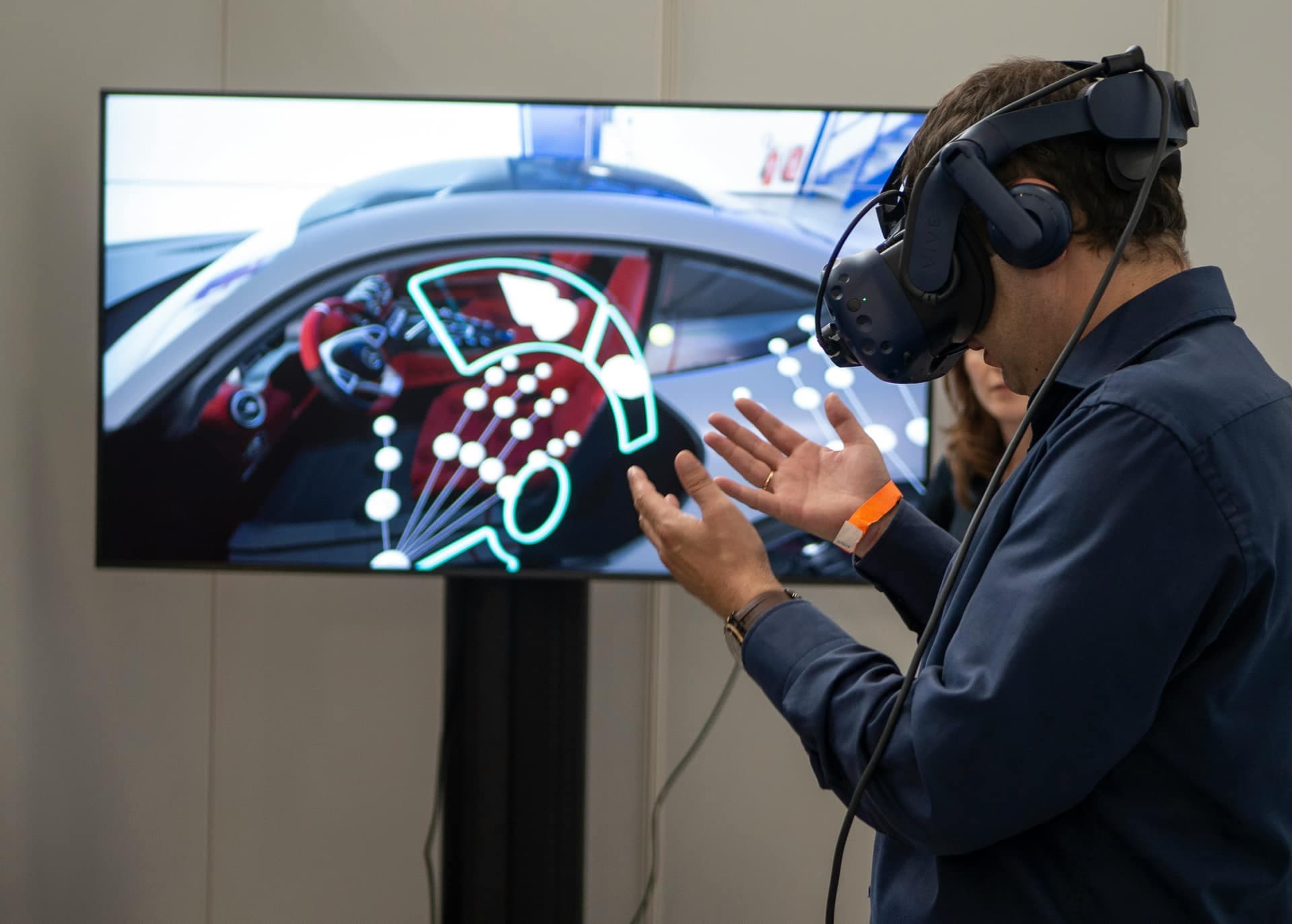
Headsets, deployed on-site
Devices in kiosk mode, ready on the floor, with onboarding for your trainers.
Scored, certified sessions
Every attempt scored and timed, with pass thresholds and certificates.
An audit-ready outcome report
Competency evidence mapped to statutory requirements, ready for your board and auditors.
How the pilot works
Scope
We agree the modules, sites and success metrics for the pilot.
Configure
We tailor the scenarios to your hazards and deploy the headsets.
Run & measure
Your crews train; we capture scores, timings and retention.
Review & scale
We review the evidence together and plan the rollout across sites.
Start your pilot
Tell us about your sites and hazards. We will come back with a scoped pilot plan and an indicative timeline.
Why start with a pilot, not a full rollout
Rolling out a new training method across every site at once is a large bet. A DrillXR pilot lets you place a small, controlled bet first, gather hard evidence on your own operators and your own hazards, and only then commit to scale. Instead of asking your leadership to approve a programme on the strength of a vendor brochure, you walk in with scored sessions, time-to-competency figures and an audit-ready report drawn from your actual floor. That is the difference between a procurement decision and a proven one.
A pilot also de-risks the human side of change. Trainers get hands-on with the headsets in kiosk mode, supervisors see how scoring maps to their existing competency matrix, and EHS leads confirm that the evidence lines up with statutory expectations before a single additional site is committed. By the time you scale, the workflow is familiar, the objections are answered, and the rollout plan is built on observed results rather than optimistic assumptions. If you want to see the broader system first, the DrillXR platform page walks through the engine behind every scenario, and our VR safety training overview explains where it fits in your wider EHS programme.
What a 60 to 90 day pilot looks like
Most pilots run over a single quarter. In the first two to three weeks we scope the modules with your EHS and operations leads, agree the success metrics, and configure the scenarios to your equipment, site layout and standard operating procedures. Headsets arrive pre-loaded and in kiosk mode, so there is no per-user setup and no IT overhead on the floor. From there, your crews train in scheduled sessions across the next four to ten weeks while DrillXR captures every attempt. We close with a structured review where the evidence is read together and the rollout decision is made.
Throughout the pilot you are measuring a small set of metrics that matter to a board:
- Time-to-competency — how quickly a new or re-certifying operator reaches the pass threshold, compared with your classroom baseline.
- Assessment scores — the scored accuracy of each action in the drill, tracked across repeated attempts to show genuine retention rather than a one-off pass.
- Near-miss and incident signals — early indicators on the floor in the weeks after training, read alongside your existing safety reporting.
- Coverage and completion — the share of the target crew who have a logged, certified attempt against each required scenario.
Success looks like a clear, defensible lift on these numbers against your starting point — not a vague sense that people enjoyed the headset. When a scenario calls for several people to coordinate, our multiplayer training scores the team as a unit, so you can see how a shift actually responds together rather than only how individuals perform in isolation.
How the pilot de-risks a multi-site rollout
The hardest part of any safety programme is consistency across locations. A scenario that works at one plant has to hold up when it reaches a site with different equipment, different shift patterns and a different safety culture. The pilot is where you prove that your chosen modules travel. By configuring against your real hazards and running with a representative crew, you surface the edge cases — unusual layouts, local procedures, language needs — while the cost of fixing them is small. The result is a rollout plan that already accounts for the variation you will meet at scale.
Because every session is scored and logged, the pilot also produces the artefact that makes scaling fundable: a single, consistent record of competence that an auditor or a board can read at a glance. That same record-keeping continues unchanged as you grow, so the evidence base compounds with every site you add. To see the kinds of outcomes other industrial teams measure, read our case studies and outcomes, compare the economics in our guide to VR training ROI, or explore the full VR training catalogue and the industries we serve.
Pilot FAQs
How long does a pilot take?
A typical pilot runs over 60 to 90 days, from scoping to the review of results, depending on the number of sites and modules.
What does a pilot cost?
Pilots are scoped to your modules and sites. Share your requirements and we will return an indicative figure; it is a fraction of the cost of a single serious incident.
Which modules do most teams start with?
Fire and evacuation and forklift operation are the most common openers because they apply across almost every industrial site.
What hardware is required?
DrillXR runs on standalone headsets such as Meta Quest and Pico, as well as PC-VR. We deploy devices in kiosk mode so there is no per-user setup.

Prove it on your floor.
Scope a focused pilot with scored results and an audit-ready report.