
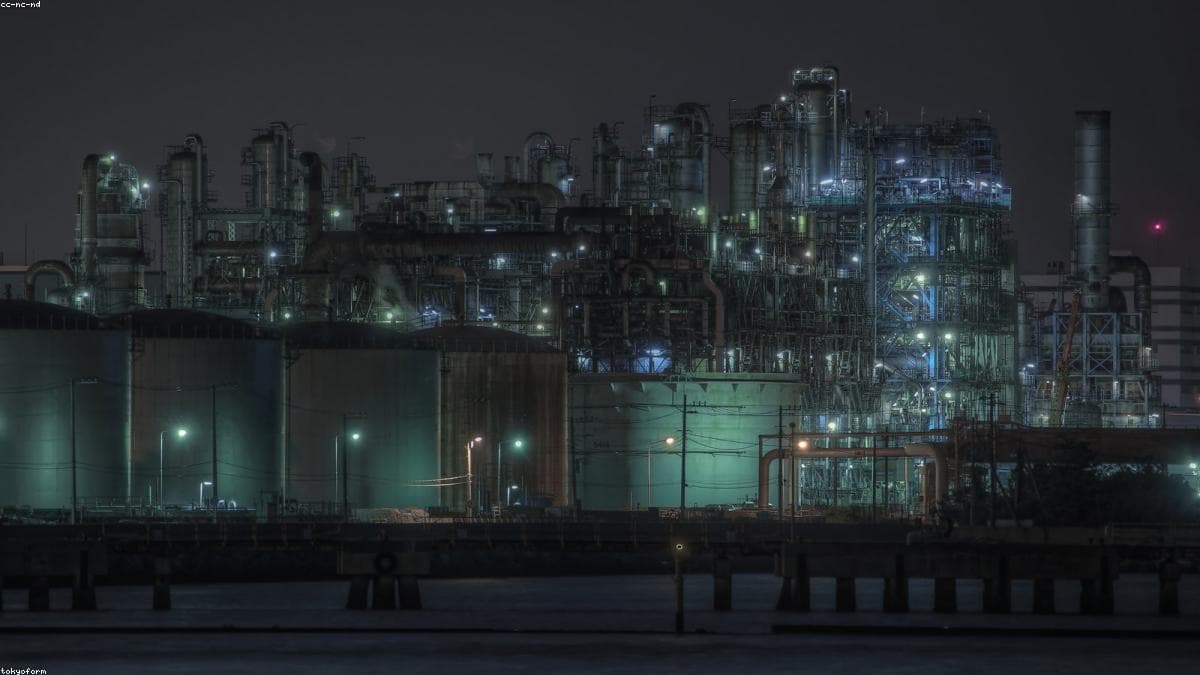
VR safety training for chemical industry in India.
Chemical-industry safety training that drills toxic release, confined space and emergency response in VR. Real accident data across MAH units, MSIHC-aligned, audit-ready.
across 130+ major chemical accidents in India in a 30-month window after 2020.
Source: Centre for Science and Environment (CSE)
The challenge: toxic releases and runaway reactions
India operates around 1,861 Major Accident Hazard (MAH) units across 25 states. A 2022 Centre for Science and Environment analysis counted more than 130 major chemical accidents in just 30 months post-2020, with 218 fatalities and over 300 injuries. The 2020 LG Polymers styrene release in Visakhapatnam killed 13 and sickened more than a thousand residents; Gujarat alone logged over 60 major fires and gas leaks in 2021.
Toxic exposure, runaway reactions, confined-space entries and spill response are hazards you cannot recreate with real chemicals and real exposure to train people. So the procedures that prevent the next Visakhapatnam are rehearsed least.
Major Accident Hazard (MAH) units across India.
NDMA
and 1,000+ sickened in the 2020 Visakhapatnam (LG Polymers) gas leak.
NDRF / public record
major fires & gas leaks in Gujarat alone in 2021.
state records / media
An SDS briefing and a classroom session cannot teach a worker to don the right PPE, contain a spreading release and decontaminate correctly while the clock runs. That sequence has to be performed to be learned — and it cannot be performed with real hazardous material.
The DrillXR approach for chemicals
DrillXR drills chemical & spill response in VR — substance identification from the SDS, correct PPE selection, containment, decontamination and reporting — alongside confined-space entry and coordinated emergency mock drills, scoring every action. Crews rehearse the toxic release safely, repeatedly, until competent.
Every attempt maps to the MSIHC Rules and the MAH-unit on-site emergency plan and lands in one audit-ready record, so process-safety competence is provable to PESO and the Factories Inspectorate, not just asserted.
The case for immersive rehearsal, from published research
A landmark PwC study of immersive training found that VR learners completed training up to four times faster than in the classroom, were up to 275% more confident applying what they had learned, and felt 3.75 times more emotionally connected to the material than classroom learners — the emotional encoding that makes a procedure stick under real pressure.
The National Training Laboratories' learning research puts retention from learning-by-doing at roughly 75%, against only about 5% for a lecture and 10% for reading. Safety procedures are doing — not facts to memorise — which is exactly where immersive rehearsal compounds. The ILO, separately, estimates that workplace accidents and ill-health cost economies around 4% of GDP, so the upside of competence that actually transfers is measured in avoided incidents, not training hours.
faster to competency than classroom training (PwC benchmark, applied to your onboarding).
knowledge retention for rehearsed, hands-on procedures vs ~5% for lectures (NTL).
of attempts scored, timed and certified into one audit-ready record.
Projected impact based on published, third-party VR-training research (PwC; National Training Laboratories) applied to a DrillXR deployment — research-based benchmarks, not a guarantee or a specific client result. Your own figures are established during a pilot.
Every figure on this page is cited
The statistics above are drawn from public regulators, government data and independent research, not from DrillXR. Industry figures describe the sector’s real risk; the efficacy figures come from third-party VR-training studies. We do not publish invented client outcomes.
- [1]Centre for Science and Environment (CSE) — Analysis of major chemical accidents post-2020 (218 fatalities).
- [2]NDMA / NDRF — Chemical hazards and MAH unit data; Visakhapatnam gas leak (2020).
- [3]PwC — The Effectiveness of VR Soft Skills Training in the Enterprise (study).
- [4]National Training Laboratories — Learning retention / the learning pyramid.
- [5]International Labour Organization (ILO) — The enormous burden of poor working conditions (≈4% of GDP).
Chemicals VR training — FAQs
Which module matters most for chemical plants?
Chemical & spill response — PPE selection, containment, decontamination and reporting — backed by confined-space entry and multiplayer emergency drills for coordinated incident response.
Does it align to MSIHC / MAH obligations?
Yes. Scored, certified drills produce audit-ready evidence mapped to the MSIHC Rules, the Factories Act (MAH units) and PESO expectations.
Can a worker rehearse a toxic release safely?
That is precisely the point — VR recreates the release with no real exposure, so the response is built before any real event.
Prove competence in chemicals, before the incident.
Book a walkthrough tuned to your sector hazards, or scope a pilot on your own site.