
Real emergencies are a team sport. So is our training.
Most VR safety training is single-player. DrillXR runs multiplayer team drills, so your crew rehearses coordinated response together, exactly how a real incident unfolds.
Shared live scenarios
Multiple trainees in one evacuation or fire response, seeing and hearing each other in real time.
Role assignment
Incident commander, first responder, marshal — everyone drills their actual job.
Coordination scoring
We measure communication and handoffs, not just individual steps.
Remote-joined
Trainers and trainees across sites join the same drill from anywhere.
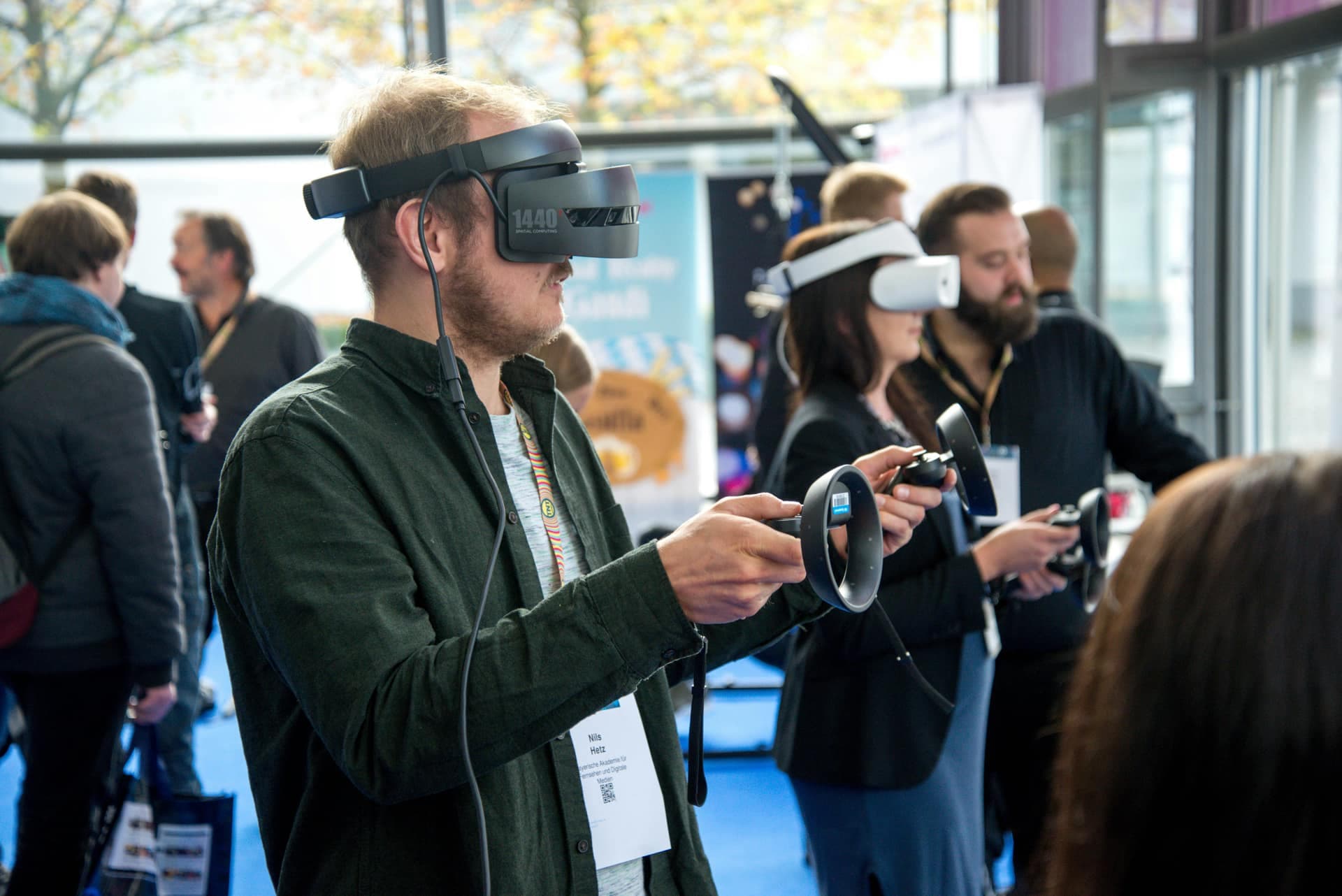
Real emergencies are team events
Walk through any serious incident report and you will find the same pattern: the outcome turned not on whether one person knew the procedure, but on whether a group of people executed it together under pressure. A fire is contained because the marshal clears the floor while the responder fights the source and the commander calls it in — in the right order, with the right communication, at the right time. Train each of those people alone and you have competent individuals who have never actually worked as a crew. The first time they coordinate is the worst possible time to find out they cannot.
This is the gap single-player VR cannot close, and it is exactly the gap DrillXR is built to close. Our multiplayer drills are the differentiator: multiple trainees inside one live scenario, seeing and hearing each other in real time, rehearsing the coordinated response a real incident demands. It is the natural next step after individual VR safety training, and it runs on the same headsets and the same compliance platform.
How shared live scenarios work
When a team starts a drill, everyone enters the same virtual facility at the same time. They occupy a shared space — they can see where their colleagues are, hear them speak, and watch them act. When the marshal directs people to an exit, the responders hear it and move. When the commander asks for a status, the answer comes back over live voice. Nothing is scripted on rails; the scenario unfolds according to what the team actually does, and a mistake by one member changes the situation everyone else has to deal with — just like reality.
Before the drill begins, each participant is assigned a role that mirrors their real job. The incident commander owns the decision and the call-out. The first responders engage the hazard directly. The marshals manage evacuation, headcount and access control. Because everyone drills their actual responsibility rather than a generic avatar, the muscle memory built in VR transfers straight to the floor.
Coordination and communication scoring
Single-player VR can tell you whether someone pulled the right pin or took the right route. It cannot tell you whether a crew communicated. DrillXR scores the team layer directly: did the commander establish control, did information flow to the people who needed it, were handoffs clean, did the evacuation complete in time and with everyone accounted for? These are the variables that decide real outcomes, and they are the variables a multiplayer drill makes visible and measurable.
Every drill produces a debrief the whole team can review together, and the results feed the same audit-ready record as individual training — so coordinated readiness becomes something you can prove, not just assert.
Remote-joined, multi-site drills
A trainer in your head office can run a drill for a crew three states away. Participants across different facilities can join the same scenario from wherever they are, which means a specialist instructor no longer has to travel to every site to run a credible exercise. For organisations operating many plants, this is how you standardise emergency response without standing up a training team in every location.
It also makes drills repeatable and cheap to run, so teams practise often instead of once a year. The fastest way to understand the difference is to see a team drill live or to start a pilot with one of your own crews.
How multiplayer differs from single-player VR
Most VR safety offerings are single-player: one person, one headset, one scenario, scored on individual steps. That is genuinely useful for building procedural competence, and it is where most teams should start. But it stops short of the thing that actually saves lives in a real event — the coordinated execution of a trained crew. DrillXR carries the same scenarios from solo practice into live team drills without a second system, so the leap from competent individuals to a ready crew happens inside one programme.
If you are weighing the broader case for immersive over classroom methods, our write-up on VR versus traditional safety training covers the retention and performance evidence, and the industries page shows the high-hazard sectors where coordinated drills matter most.
The debrief and after-action review
A drill that ends when the scenario does has thrown away half its value. The learning happens in the after-action review, and DrillXR is built to make that review concrete rather than impressionistic. Every multiplayer drill produces a debrief the whole team can sit down with: who did what, when each decision was made, where information failed to reach the person who needed it, and how long the coordinated response actually took. Instead of arguing from memory about what went wrong, a crew reviews a shared, scored record of the event — the same kind of structured after-action review the armed forces have relied on for decades. Because the results feed the same audit-ready record as individual VR safety training, the improvements a debrief surfaces are tracked over time rather than forgotten by the next shift.
Run a scenario, review it honestly, adjust, and run it again — that loop is how coordination genuinely improves, and it is the loop a multiplayer drill makes cheap enough to repeat. A crew that debriefs an emergency mock drill this quarter and runs it again next quarter can see its own curve of improvement, not just assert that it got better.
How multiplayer complements single-player modules
Multiplayer drills do not replace single-player training; they complete it. The right sequence is to build individual procedural competence first — one person, one headset, mastering the steps of a fire safety response or an isolation procedure until the actions are second nature — and then bring those competent individuals together into a live team drill where coordination becomes the thing under test. Skip the first stage and a team drill descends into people fumbling basic steps; skip the second and you have a roster of capable individuals who have never operated as a crew. DrillXR carries the same scenarios across both stages on one platform, so the progression from solo practice to coordinated readiness happens without a second system or a second supplier.
For multi-site operators this is also how emergency response gets standardised. The same scenario, scored the same way, run by crews across every plant, produces a common standard of readiness rather than a patchwork that varies by location. The full catalogue of scenarios sits under VR training, and the quickest way to feel the difference between watching a drill and running one is to book a walkthrough.
Drill as a team, not solo.
See a multiplayer emergency drill with role assignment and coordination scoring.