
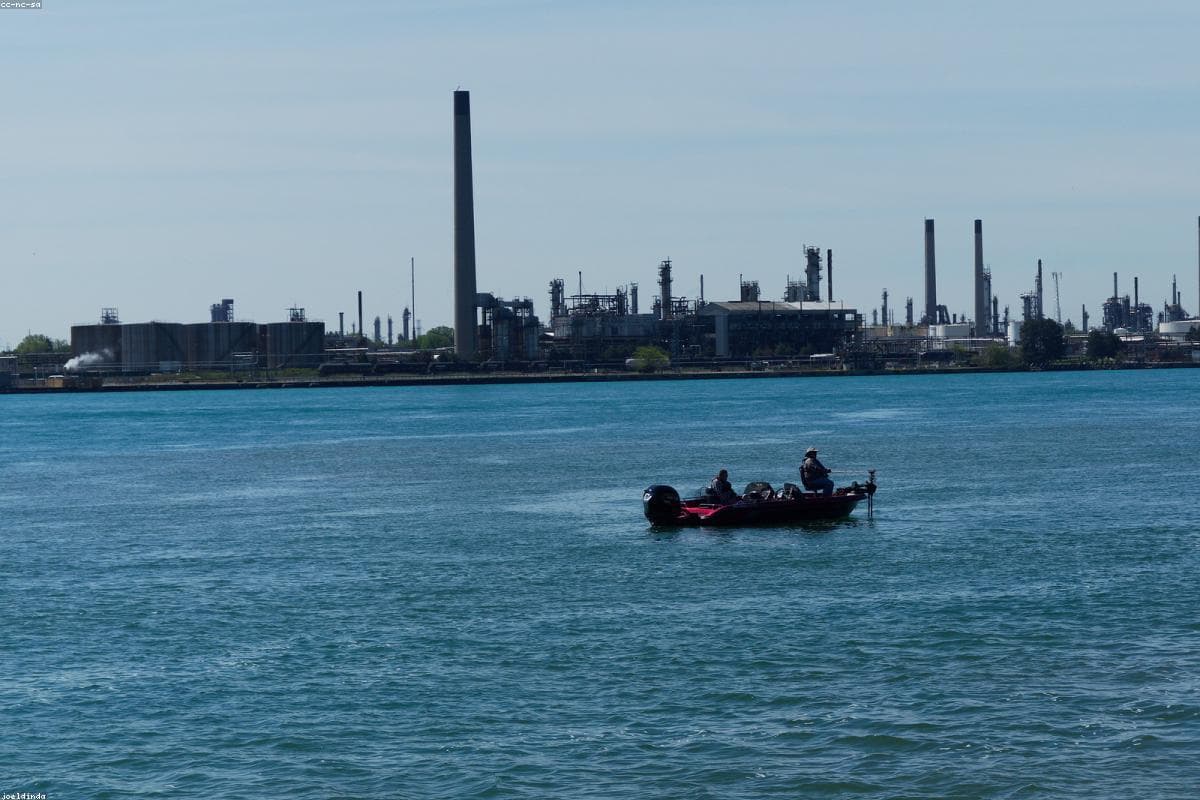
H2S & Gas Detection VR training.
Practise gas-monitor use, escape and rescue for hydrogen-sulphide and toxic-gas atmospheres you can never stage for real.
H2S & Gas Detection VR training
DrillXR Hydrogen Sulphide and Gas Detection trains workers to survive an atmosphere that can knock them down in seconds, where the right reaction has to be instinct because there is no time to think. The simulation reproduces the hazards that make gas exposure lethal: hydrogen sulphide (H2S) exposure and rapid knockdown, oxygen-deficient atmospheres, misuse of the gas monitor, and the failed escape or rescue that turns one casualty into several. Inside the headset the worker bump-tests and dons the gas monitor, recognises alarms and reads the wind direction, escapes upwind to the muster point, uses an SCBA or escape set, and initiates a rescue without becoming a casualty themselves. Because hydrogen sulphide (H2S) deadens the sense of smell and overwhelms a person fast, the headset trains the monitor-alarm-escape-upwind discipline before a real release ever tests it.
Gas exposure incidents are among the most feared in the oil, gas and process industries, and India's framework reflects that. The Factories Act 1948 sets the duty of care for workers exposed to toxic atmospheres, OISD-GDN-182 governs confined-space and gas practice in the petroleum sector, and the Manufacture, Storage and Import of Hazardous Chemicals Rules control work around hazardous substances. The classic tragedy is a worker overcome by hydrogen sulphide (H2S) and a colleague who rushes in to help and is overcome by the same gas. A classroom cannot convey the speed of knockdown or the pull to rescue; DrillXR makes the invisible gas a modelled, consequential hazard, rehearsing the alarm response, the upwind escape and the never-become-a-casualty rescue until the instinct holds under pressure.
Why train h2s & gas detection in VR
Gas hazards are invisible and fast, and the human instinct to rush to a collapsed colleague is exactly what gets rescuers killed, neither of which a classroom can address. You cannot safely demonstrate a hydrogen sulphide (H2S) release or an oxygen-deficient atmosphere to a learner, so traditional training stays theoretical, and theory fails the moment an alarm sounds and a colleague drops. VR makes the gas a visible, modelled hazard: the trainee bump-tests and dons the monitor, hears the alarm, reads the wind, escapes upwind and learns through the simulation why charging in to rescue without protection simply adds a body. The SCBA, the escape set and the upwind muster become concrete actions rather than abstract rules. No staged drill can put a learner near a genuinely lethal gas; DrillXR can, safely, which is why it changes the instinct that kills.
Inside a h2s & gas detection session
The session begins as the trainee prepares to enter a process area. They first bump-test and don the gas monitor, confirming it responds and reads correctly rather than trusting an unchecked unit. Working in the area, an alarm sounds as a hydrogen sulphide (H2S) release develops; the trainee must recognise the alarm immediately and read the wind direction rather than freezing or investigating the source. They escape upwind to the muster point, moving away from the gas and crosswind to clear it rather than downwind into it. Where the situation demands it they don an SCBA or use an escape set to get clear. When a colleague is down, the scenario tests the rescue: an unprotected entry is penalised as a second casualty, while a correctly protected, planned rescue is the scored success.
Scoring & certification
Each attempt is scored across the procedure: monitor bump-tested and donned, alarms and wind direction recognised, escaped upwind to muster, SCBA or escape set used, and rescue initiated without becoming a casualty. The critical failures are logged explicitly, an unchecked monitor, a missed or ignored alarm, an escape taken downwind, or an unprotected rescue entry, because these are the exact errors that kill in real gas incidents. Per-step weighting produces an overall competency outcome, and a passing run issues a dated certificate against the worker's record. Results stream over xAPI and SCORM to the LMS and the DrillXR compliance dashboard, where a safety officer can verify that only competent staff work in hydrogen sulphide (H2S) risk areas and can evidence gas-awareness competence to a regulator.
Deployment on your site
Hydrogen Sulphide and Gas Detection runs on Meta Quest, Pico and PC-VR and launches in kiosk mode, booting directly into the module so a site induction can run trainees through in sequence. The scenario is configurable to the site: the gases expected, the monitor and alarm types in use, the wind and muster arrangements, the SCBA and escape-set provision and the site gas-response procedure can be matched to the customer's operation. Headsets are managed as a fleet from one console with completion data feeding the central dashboard. For oil and gas, refining, chemicals and water-treatment operators, this delivers consistent, auditable gas-awareness competence across every site without ever exposing a trainee to a real hydrogen sulphide (H2S) atmosphere.
Explore all VR safety training, see how it adapts to your industry, or read whether VR is effective for safety training.
Hazards it reproduces
- H2S exposure & rapid knockdown
- oxygen-deficient atmospheres
- gas-monitor misuse
- failed escape & rescue
The scored procedure
- 01Bump-test and don the gas monitor
- 02Recognise alarms and wind direction
- 03Escape upwind to muster
- 04Use SCBA / escape set
- 05Initiate rescue without becoming a casualty
Compliance mapping
H2S & Gas Detection training by industry & location
Tuned to sector hazards and local regulation. Explore the combinations most relevant to this module.
H2S & Gas Detection FAQs
What does the H2S & Gas Detection VR module cover?
Practise gas-monitor use, escape and rescue for hydrogen-sulphide and toxic-gas atmospheres you can never stage for real.
Which hazards does it simulate?
H2S exposure & rapid knockdown; oxygen-deficient atmospheres; gas-monitor misuse; failed escape & rescue.
Is the h2s & gas detection training assessed?
Yes. Every step is scored and timed, with pass thresholds that trigger certificates and feed the compliance dashboard.
Which standards does it map to?
Factories Act 1948; OISD-GDN-182 (confined space); MSIHC Rules.
See H2S & Gas Detection scored live.
Book a walkthrough tuned to your equipment and site.