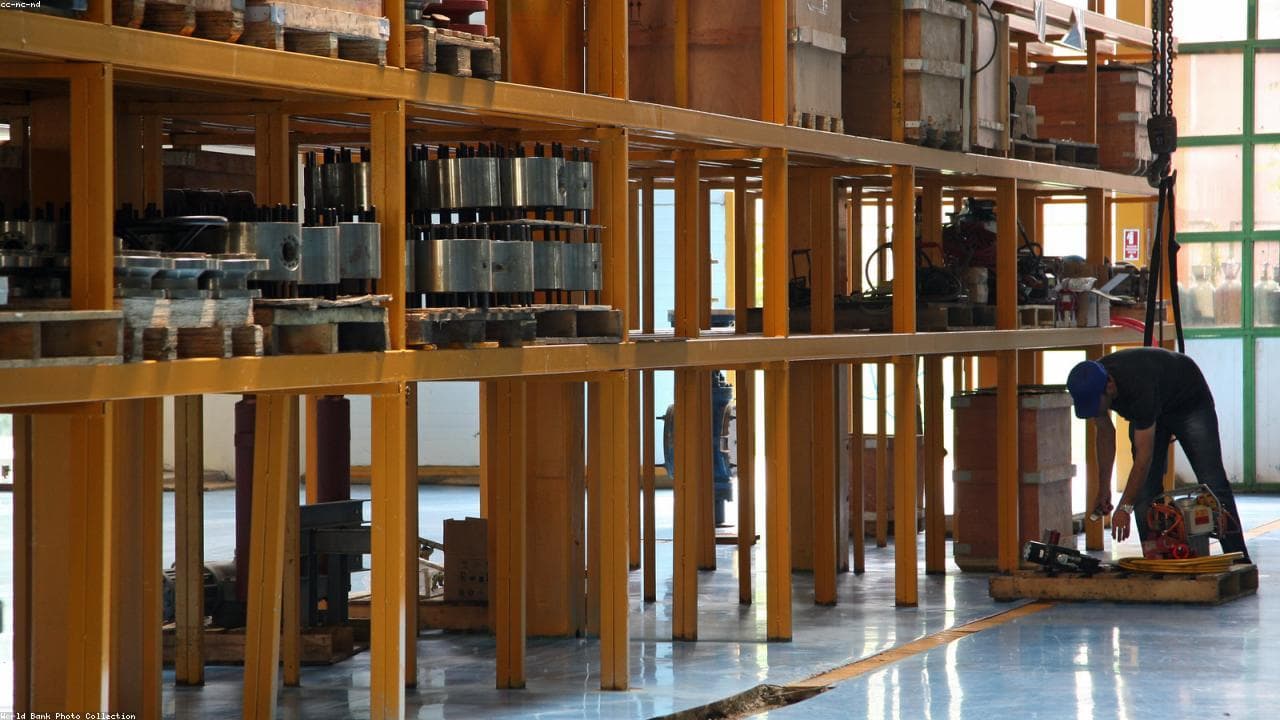

Tuned to the hazards of your sector.
Module content, regulations and risk framing adapted per industry. Choose your sector to see the priority modules and compliance mapping.
Manufacturing
Standardise safety across lines, shifts and plants with assessable VR drills.
Mining
Rehearse high-consequence underground and surface hazards safely, and prove competence to the regulator.
Oil & Gas
Process-safety and emergency drills for refineries, terminals and field operations.
Construction
Fall-prevention, lifting and site-traffic drills for project sites.
Pharma
Cleanroom protocol, chemical handling and containment drills for regulated manufacturing.
Power & Utilities
Electrical-isolation, height and switchyard drills for generation and distribution.
Cement
Hot-process, confined-space and height drills for cement operations.
Steel
Molten-metal, crane and machinery drills for integrated steel works.
Chemicals
Containment, confined-space and emergency-response drills for chemical processing.
Warehousing & Logistics
Forklift, racking and pedestrian-safety drills for distribution operations.
Ports & Terminals
Lifting, traffic and height drills for port and terminal operations.
Automotive
Line-side machine, robotics and material-handling drills for auto plants.
Why safety training has to be sector-specific
Generic safety training treats a steel plant, a pharmaceutical clean room and a container terminal as if they shared the same hazards. They do not. The fire risk on a chemical site behaves nothing like the fire risk in a warehouse; the way a load fails on a forklift is not the way a load fails on a port crane; and the regulations that govern a power station differ from those that govern a cement works. Training that ignores these differences leaves workers prepared for an abstract workplace and unprepared for their own.
DrillXR is built on the opposite principle: the closer a simulation sits to the worker’s real environment, the more competence transfers back to the floor. A drill that uses the equipment they operate, the layout they walk, and the failure modes their sector actually produces is a drill they remember when it matters. That is why the module library is organised not only by hazard but by industry, so each sector sees training framed around the risks that define it.
How DrillXR tunes each scenario to your sector
Three things change when a module is adapted to an industry: the scenario, the regulations and the risk framing.
- Scenario. The environment, equipment and hazard behaviour are set to match the sector. A confined-space entry in oil & gas looks and behaves differently from one in a water-treatment plant, and the simulation reflects that.
- Regulations. The competencies a module certifies are mapped to the statutory duties that apply to the sector — the Factories Act 1948 and the relevant Bureau of Indian Standards (BIS) codes — so the training defends a real compliance position rather than a generic one.
- Risk framing. The way consequences are presented is calibrated to what is actually at stake in that industry, from a process upset in chemicals to a dropped load on a quayside.
The underlying engine is shared, so a worker who moves between sites still trains on familiar mechanics, but the content they experience is unmistakably theirs. The DrillXR platform holds this together with consistent scoring, certification and reporting across every sector you operate in.
The breadth of sectors we serve
DrillXR supports the full span of India’s industrial base — manufacturing, mining, oil & gas, construction, pharmaceuticals, power generation, cement, steel, chemicals, warehousing and logistics, ports, and automotive. Each of these sectors carries its own dominant hazards and its own regulatory emphasis, and each is served by a tailored selection of modules rather than a one-size catalogue.
For high-energy environments such as manufacturing, the priority is usually machine safety, lockout/tagout and fire response. For process industries the emphasis shifts to confined spaces and chemical handling. For mobile-plant-heavy operations such as warehousing and ports, it is the safe movement of vehicles and loads. Whatever the mix, the goal is the same: train workers on the hazards that are genuinely most likely to hurt them on their own site.
Picking the right modules for your sector
Choosing the right modules begins with the hazards that actually drive incidents in your operation. Start from your own risk register and near-miss data, identify the tasks where a single error is catastrophic, and match those to the modules that rehearse exactly those decisions — for example fire safety for plants with significant fire load, or forklift operation for sites with heavy internal vehicle movement.
From there, sequence the rollout by role and by risk: train the workers performing the highest-consequence tasks first, then widen coverage across shifts and sites. Many organisations begin with a focused rollout on one or two sector-priority modules to prove the approach before scaling. To see your sector’s priorities mapped against the catalogue, the fastest route is a guided walkthrough, and our VR safety training overview explains how the wider programme fits together.
Frequently asked questions
Do you support sectors not listed here? The module engine is hazard based, so most industrial environments are well covered even when they sit outside the headline sectors, and scenarios can be configured to an unusual operation.
How is regulatory compliance handled per sector? Each module’s certified competencies are aligned to the statutory duties that apply to the sector, giving you auditable evidence that maps to the obligations your industry carries.
Can one programme cover multiple sectors? Yes. Organisations running several types of site manage them from a single platform, with each location seeing the modules and framing appropriate to its sector.