
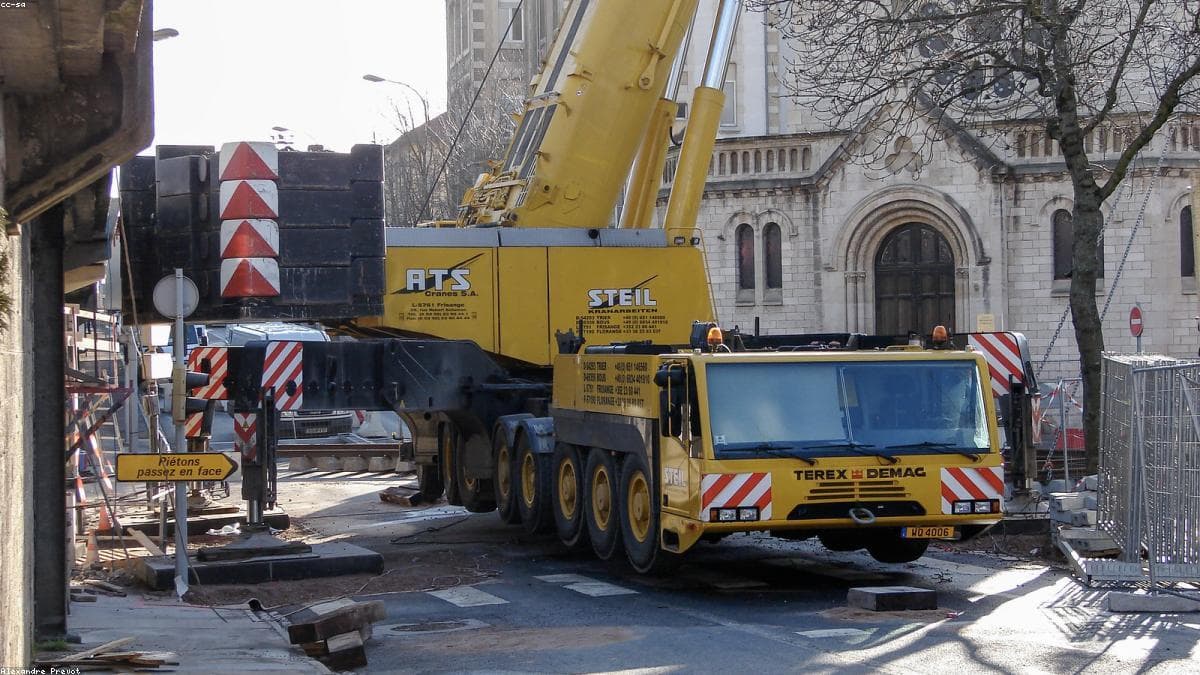
VR safety training for construction.
Fall-prevention, lifting and site-traffic drills for project sites.
VR safety training for construction
Construction is India's largest employer of industrial labour and its most fatal sector, driven by infrastructure, real estate and industrial-project work that mobilises huge transient workforces onto sites that change shape every week. The defining feature is impermanence: scaffolds rise and come down, excavations open and close, cranes lift over crews, and the people doing the work are often migrant labour engaged through contractors, with limited prior induction and high turnover between projects.
That churn makes conventional safety training almost impossible to sustain — a toolbox talk delivered to one crew is gone when the next gang arrives. DrillXR makes induction repeatable and assessable: every worker, on every project, runs the same scored VR drills for the hazards that actually kill on sites — falling from height, being struck during a lift, an excavation collapse — and a site safety officer sees, per worker, who is competent before they are allowed onto the structure. The training travels with the curriculum, not with a single trainer.
The risks driving construction training
Construction fatalities are overwhelmingly concentrated in a handful of mechanisms. Falls from height — off scaffolds, edges, ladders and fragile roofs — are the single largest killer, usually traced to missing or misused fall-arrest equipment and wrong anchor selection. Lifting operations cause struck-by and crushing injuries when loads, exclusion zones and signalling are mismanaged. Excavation collapse buries workers in unsupported or wrongly battered trenches. Site-traffic incidents arise where plant, delivery vehicles and people share congested ground. These are split-second, physical failures that no written test can certify a worker against.
How DrillXR fits construction
DrillXR's priority modules for construction target the lethal hazards in order: Work at Height for harness inspection, anchor rating and 100% tie-off discipline on virtual scaffolds and structures; Fire & Evacuation for site-fire and egress response; the multiplayer Emergency Mock Drill for coordinated rescue and site evacuation; and Machine Safety for plant and equipment hazards. The Work at Height module lets a worker make and feel the consequence of a wrong anchor choice in VR, with each step — inspect PPE, rate the anchor, maintain tie-off, work within the safe envelope — scored and certified. Induction becomes a measured competence gate, not a signature.
Compliance & audit readiness
Construction safety is governed primarily by the Building and Other Construction Workers (Regulation of Employment and Conditions of Service) Act 1996 (the BOCW Act) and its central and state rules, with the Factories Act applying to off-site fabrication works and BIS standards such as IS 3764 informing excavation and safety practice. DrillXR's per-step scoring, certification and retained records give principal employers and contractors documented, worker-level proof of fall-protection and site-safety competence — exportable via xAPI/SCORM — which is exactly the evidence BOCW inspections and client safety audits demand from a transient workforce.
Rolling out across your sites
Contractors run many concurrent project sites with workforces that move between them. DrillXR deploys standalone headsets to each site for on-arrival induction in kiosk mode, with results flowing to one dashboard so head-office EHS sees competence across every active project. The same curriculum inducts a crew whether they are on a metro line, a refinery expansion or a high-rise, and when a project closes the headsets and curriculum redeploy to the next mobilisation — making safety induction a portable, standardised asset rather than a per-site rebuild.
Browse the full module library, see where we deploy across India, or read about the ROI of VR safety training.
Sector risks we drill
- falls from height
- lifting operations
- excavation collapse
- site-traffic
Regulations & standards
Priority modules for construction
Work at Height
Rehearse harness use, anchor selection and fall-arrest procedure on virtual scaffolds and structures with real consequences, none of the risk.
Fire & Evacuation
Practise extinguisher selection, fire-spread behaviour and coordinated evacuation in a true-to-life plant fire, without lighting one.
Emergency Mock Drill
Run multi-trainee, role-based emergency response under timed pressure, coordination scored, not just individual steps.
Machine Safety
Train on guarding, interlocks, safe-stop and lock-and-verify before access on virtual production equipment.
Electrical Safety & Arc Flash
Rehearse safe isolation, arc-flash boundaries and arc-rated PPE selection on virtual switchgear before anyone works on energised equipment.
Crane & Lifting Operations
Train slinging, signalling and load-path discipline for crane and rigging operations in a virtual yard, before a real load is ever in the air.
Scaffolding Safety
Drill scaffold inspection, safe access and the inspect-tag-or-quarantine decision on virtual structures before any crew climbs.
Hot Work & Welding Permit
Rehearse gas testing, fire-watch and the hot-work permit before any welding, cutting or grinding begins in a hazardous area.
Defensive Driving & Road Safety
Train hazard perception, journey management and reversing discipline for plant vehicles and fleet drivers in a virtual cab.
Excavation & Trenching
Drill shoring, edge protection and underground-services checks on a virtual site before anyone enters a trench.
First Aid & Emergency Response
Rehearse scene assessment, CPR and casualty handling under pressure so responders act decisively instead of freezing.
Ladder Safety
Train workers to select, set up and climb portable ladders correctly in a virtual workplace, before a poor angle or an unfooted stile puts someone on the floor.
MEWP & Aerial Work Platforms
Rehearse pre-use checks, safe positioning and platform operation of scissor lifts and boom MEWPs in a virtual site, where a tip-over or an overhead strike only costs a score.
Rope Access
Drill twin-rope rigging, controlled descent and the discipline of a backup device on virtual structures, where a mis-rigged rope teaches a lesson instead of dropping a technician.
Fragile Roof & Roof Work
Train workers to recognise fragile roofing, plan safe access and stay on rated walkways and fall protection, before a step onto a skylight becomes a fall through the roof.
Work-at-Height Rescue
Rehearse the recovery of a fallen, suspended worker against the clock, so a rescue team can act on a plan rather than improvise while suspension trauma sets in.
Fall Protection Equipment Inspection
Train workers to inspect harnesses, lanyards and connectors and condemn defective gear, so a worn stitch or a deformed hook is caught on the ground, not under load.
Slinging & Rigging
Rehearse sling selection, load-weight estimation and rigging technique in a virtual yard so a load is secured correctly before it ever leaves the ground.
Solar PV & Rooftop Electrical Safety
Rehearse rooftop PV isolation, DC arc and fall-protection discipline on a virtual array where a string stays live in daylight and the consequence is scored, not real.
Cable Jointing & Underground Cables
Rehearse cable identification, spiking and prove-dead discipline before cutting an underground cable, in a simulation where a wrong cut teaches instead of kills.
Fire Watch (Hot-Work Standby)
Train the dedicated fire-watch role for hot work, watching for ignition, holding the post and acting on the first sign of fire on a virtual job.
PPE Selection & Use
Practise matching the right personal protective equipment to the real hazard, fitting it correctly and checking it, before a wrong choice becomes an injury.
Silica & Respirable Dust
Drill dust-control measures, respirator use and the discipline that keeps respirable crystalline silica out of workers' lungs on dusty sites.
Heat Stress Management
Rehearse recognising heat-illness warning signs, hydration and work-rest discipline, and the response that stops heat exhaustion becoming heat stroke.
Hand & Power Tool Safety
Train safe selection, inspection and handling of hand and portable power tools in a virtual workshop before a worker ever picks up a live tool.
Hazard Identification & Risk Assessment (HIRA)
Practise spotting hazards, assessing risk and selecting controls on a walk-through of a virtual plant, building the eye for hazards a checklist alone cannot teach.
Permit-to-Work System
Drill the permit-to-work lifecycle, raise, authorise, control, hand back and close, across roles on a virtual site so the paper discipline holds under real pressure.
Banksman & Traffic Management
Train banksman signalling, vehicle-pedestrian segregation and reversing control as a coordinated team in a virtual yard.
Blasting & Explosives Handling
Drill charge handling, exclusion-zone control and misfire procedure for drill-and-blast operations on a virtual bench.
Asbestos Awareness
Train workers to recognise likely asbestos-containing materials, stop work and follow the right controls before they disturb a hidden fibre source.
Demolition Safety
Rehearse pre-demolition survey, sequencing and exclusion-zone control so a structure is brought down in the planned order rather than collapsing unexpectedly.
Tunnelling & Underground Construction
Train ground-support discipline, atmosphere monitoring and emergency egress for underground headings where escape is slow and conditions change fast.
Welding Fume & Occupational Health
Train welders and supervisors to control welding fume at source with extraction, ventilation and RPE before the long-term health damage is done.
Hand-Arm Vibration (HAVS)
Train tool selection, grip discipline and exposure management so workers recognise and limit the vibration that causes irreversible hand-arm injury.
Working Near Water & Drowning Prevention
Rehearse edge discipline, buoyancy aid use and water rescue so workers on quaysides, banks and over-water structures survive a fall into water.
Construction VR training by location
Local framing for India's industrial clusters. Popular: Work at Height training for construction.
Construction FAQs
How does VR safety training help construction?
Fall-prevention, lifting and site-traffic drills for project sites. Crews rehearse falls from height, lifting operations, excavation collapse safely and repeatably, with scored evidence of competence.
Which regulations does it support?
BOCW Act 1996; Factories Act (off-site works); BIS IS 3764.
Which modules matter most for construction?
Work at Height, Fire & Evacuation, Emergency Mock Drill, Machine Safety.
Bring defence-grade drills to construction.
Book a walkthrough mapped to your sector hazards and regulations.