
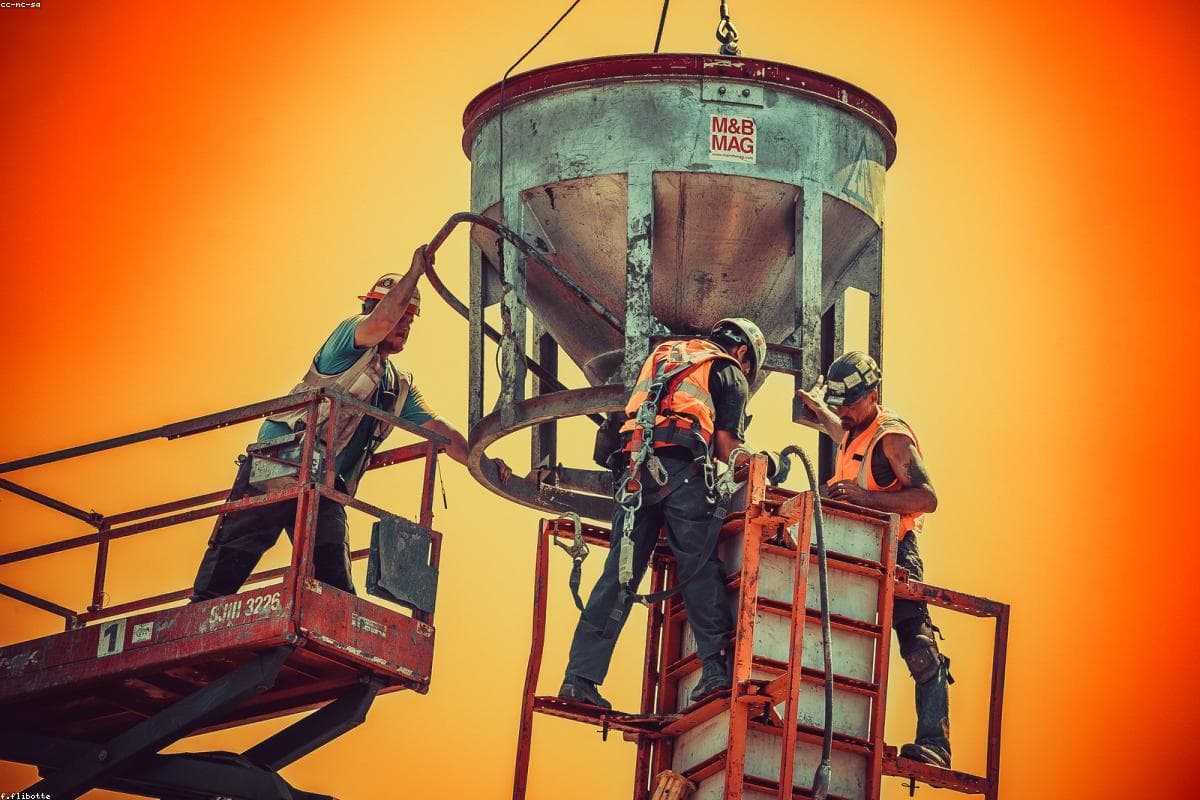
Scaffolding Safety VR training.
Drill scaffold inspection, safe access and the inspect-tag-or-quarantine decision on virtual structures before any crew climbs.
Scaffolding Safety VR training
DrillXR Scaffolding Safety trains workers to use, inspect and trust scaffolds correctly, so the structure they stand on does not become the thing that kills them. The simulation reproduces the hazards behind scaffold incidents: scaffold collapse or instability from a poor foundation or missing bracing, falls from incomplete platforms, missing guardrails and toe boards that should have stopped a fall or a dropped object, and overloading or defective ties that fail under load. Inside the headset the worker checks the scafftag and inspection status, verifies the base, ties and bracing, confirms the guardrails and a safe means of access, loads the platform within its rated limit, and reports defects and quarantines an unsafe scaffold. Because a scaffold can look usable while being unsafe, the headset trains the check-before-you-climb discipline that a quick glance never builds.
Falls and collapses involving scaffolds remain a leading cause of construction fatalities in India, and the legal framework reflects that. The Factories Act 1948 sets duties for safe work at height on the premises, the Building and Other Construction Workers Act extends protection across the construction sites where most scaffolding is erected, and BIS IS 3696 covers safety practice for scaffolds. The dangerous habit is not ignorance but familiarity: climbing onto a scaffold without checking the scafftag, assuming the ties are sound, or piling material past the rated load because the deck "felt" solid. A classroom cannot let a worker feel a platform give way; DrillXR lets them make and correct that mistake in the headset, building the inspect-and-quarantine instinct before they ever trust a real structure.
Why train scaffolding safety in VR
Scaffold safety depends on inspection discipline, and inspection is exactly what familiarity erodes. A worker who climbs the same scaffold every day stops reading the scafftag and stops checking the ties, and no poster reverses that. VR reproduces the temptation and the consequence: the trainee can step onto an incomplete platform, overload a deck or trust a defective tie and watch the scaffold become unstable or collapse in simulation, an outcome impossible to demonstrate safely on a real structure. They practise reading the scafftag, verifying base, ties and bracing, confirming guardrails and access, and quarantining a defective scaffold rather than using it. Building an unsafe scaffold to teach someone is unthinkable; DrillXR delivers the same lesson with no one exposed to a real fall, which is what makes the inspect-first habit actually stick.
Inside a scaffolding safety session
The session places the trainee at the base of a virtual scaffold with a task to perform at height. They begin by checking the scafftag and inspection status, and must refuse a scaffold tagged incomplete or out of date rather than climbing regardless. They verify the base is level and founded, and that the ties and bracing are present and sound; a missing tie correctly identified earns credit. Ascending by the safe access, they confirm the guardrails and toe boards are in place before stepping onto the platform. Tasked with bringing up material, they load within the rated limit, and an overload causes the simulation to demonstrate instability. On finding a defect, the trainee reports it and quarantines the scaffold, tagging it out of use rather than leaving it for the next person to discover the hard way.
Scoring & certification
Each attempt is scored across the procedure: scafftag and inspection status checked, base, ties and bracing verified, guardrails and safe access confirmed, loaded within the rated limit, and defects reported and quarantined. The decisive failures are captured explicitly, climbing on an incomplete or out-of-date scafftag, a missed defective tie, a missing guardrail accepted, an overload, or a defect left unreported, so an assessor sees the precise lapse. Per-step weighting produces an overall competency outcome, and a passing run issues a dated certificate against the worker's record. Results stream over xAPI and SCORM to the LMS and the DrillXR compliance dashboard, where a site safety lead can confirm only competent workers use and inspect scaffolds and can evidence that competence to a construction inspector.
Deployment on your site
Scaffolding Safety runs on Meta Quest, Pico and PC-VR and launches in kiosk mode, booting directly into the module so a site induction can run a queue of workers through without an instructor driving menus. The scenario is configurable to the customer's reality: scaffold types and configurations, the scafftag and inspection regime, the tie and bracing arrangement, guardrail standards and the site work-at-height procedure can be matched to the structures actually erected on site. Headsets are managed as a fleet from a single console, with completion records feeding the central dashboard. For construction, infrastructure and heavy-industry operators across many sites, this delivers identical scaffold-inspection training and assessment wherever the work is, before anyone is cleared onto a real platform.
Explore all VR safety training, see how it adapts to your industry, or read whether VR is effective for safety training.
Hazards it reproduces
- scaffold collapse / instability
- falls from incomplete platforms
- missing guardrails & toe boards
- overloading & defective ties
The scored procedure
- 01Check the scafftag & inspection status
- 02Verify base, ties and bracing
- 03Confirm guardrails and safe access
- 04Load within the rated limit
- 05Report defects and quarantine
Compliance mapping
Scaffolding Safety training by industry & location
Tuned to sector hazards and local regulation. Explore the combinations most relevant to this module.
Scaffolding Safety FAQs
What does the Scaffolding Safety VR module cover?
Drill scaffold inspection, safe access and the inspect-tag-or-quarantine decision on virtual structures before any crew climbs.
Which hazards does it simulate?
scaffold collapse / instability; falls from incomplete platforms; missing guardrails & toe boards; overloading & defective ties.
Is the scaffolding safety training assessed?
Yes. Every step is scored and timed, with pass thresholds that trigger certificates and feed the compliance dashboard.
Which standards does it map to?
Factories Act 1948 (work at height); BOCW Act (construction); BIS IS 3696 (scaffolds).
See Scaffolding Safety scored live.
Book a walkthrough tuned to your equipment and site.