

Earthing & Bonding VR training for chemicals in Vadodara.
Vadodara, Gujarat — petrochemicals and engineering hub (the Vadodara–Ankleshwar chemical corridor). Train workers to apply, verify and remove circuit-main earths and equipotential bonding correctly so an isolated circuit stays safe to touch.
Earthing & Bonding VR training for chemicals in Vadodara
DrillXR Earthing and Bonding trains workers to make an isolated circuit genuinely safe to touch, because isolation alone does not. The simulation reproduces the hazards that earthing and bonding exist to control: dangerous touch and step potential on an unbonded structure, back-feed or induced voltage appearing on a circuit assumed dead, an earth applied to the wrong point or to a circuit that was never proved dead, and the earth left in place when the circuit is restored. Inside the headset the worker confirms the circuit is isolated and proved dead, selects the correct earthing and bonding equipment for the rating, applies the earth to a proven dead point in the right order, verifies continuity and equipotential bonding, and removes the earths in sequence with a record before restoration. The discipline of earth-only-what-you-have-proved is what the headset is built to instil.
Earthing is the control that catches what energy isolation misses, and India's framework treats it as integral to safe electrical work. The Electricity Act 2003 and the Central Electricity Authority safety regulations set the duties for working on electrical installations, the Factories Act 1948 covers the safe operation and maintenance of electrical plant, and OISD earthing guidance shapes practice for petroleum installations. The dangerous error is rarely conceptual; it is an earth clamped to an unproven point, a bonding lead left off a structure, or an earth forgotten before re-energisation. None of those are trained out by a diagram on a wall. DrillXR lets a worker apply, verify and remove earths in the headset, and feel the consequence of a back-fed conductor or a missed bond, so the habit holds when a real circuit is in front of them.
Earthing & Bonding training for Vadodara’s industrial base
Vadodara sits at the head of one of India's most important industrial arteries — the Vadodara–Ankleshwar chemical corridor that runs down Gujarat's golden belt. The city itself is a long-established petrochemicals and heavy-engineering centre, home to large public-sector and private chemical, fertiliser and engineering complexes, while the corridor stretching south through Nandesari, Dahej and Ankleshwar concentrates one of the densest collections of chemical and petrochemical processing in the country. This is continuous-process industry at scale: reactors, pressure vessels, bulk storage, pipelines and the hazardous chemistry that runs through them, much of it classified under Major Accident Hazard rules.
On the Vadodara–Ankleshwar corridor the highest-consequence events — a confined-space fatality during a vessel entry, a toxic or H2S release, a hot-work fire, a slow emergency response — are exactly the ones that are too dangerous to practise on the real asset. That is the core case for VR. DrillXR lets a worker rehearse atmospheric testing and permit-to-work before entering a vessel, practise containment and decontamination for a specific release, and run a timed, role-based emergency drill where team coordination is scored. For MAH units whose on-site emergency plans must be demonstrably and repeatedly tested, immersive drills produce a defensible competence record that a classroom and a signed register cannot. On a corridor this hazardous and this scrutinised, reproducible proof of competence is not optional.
Inside a earthing & bonding drill
The session begins with a circuit that the trainee has been told is isolated. Their first duty is not to trust that but to confirm isolation and prove the circuit dead, testing their detector on a known live source before and after. They select earthing and bonding equipment rated for the circuit rather than whatever is to hand. They apply the earth to a proven dead point and in the correct order, and where a structure is present they apply equipotential bonding; clamp to an unproven point and the simulation demonstrates the consequence. They verify continuity and confirm the bonding is effective, establishing the equipotential zone. With work notionally complete, they remove the earths in the correct sequence and record the removal before restoration. Leaving an earth applied at restoration, or skipping the prove-dead step, is captured against the score.
Chemicals risk in focus
Chemical-sector failure modes are process-safety driven and high-consequence. Toxic release — loss of containment of a hazardous substance — threatens workers on site and populations beyond the fence line, and demands instant correct PPE, containment and reporting. Runaway reactions, where exothermic processes exceed control, can rupture vessels and trigger fire or explosion. Confined-space entry into reactors, vessels and sumps combines toxic-atmosphere, residual-chemical and entrapment hazards. Fire and explosion from flammable inventories complete the profile. Each of these escalates in seconds and turns entirely on whether trained crews execute the right procedure under acute stress.
Go deeper on the Earthing & Bonding module, VR training for chemicals, or all training in Vadodara.
The hazards drilled
- touch and step potential on an unbonded structure
- back-feed or induced voltage on a circuit assumed dead
- earth applied to the wrong point or to a still-live circuit
- earth left applied before re-energisation
Chemicals risks in Vadodara
- toxic release
- runaway reactions
- confined space
- fire/explosion
The scored procedure
- 01Confirm the circuit is isolated and proved dead
- 02Select the correct earthing and bonding equipment
- 03Apply the earth to a proven dead point in the right order
- 04Verify continuity and equipotential bonding
- 05Remove earths in sequence and record before restoration
Compliance mapping
Related drills for chemicals
Explore the Earthing & Bonding module, VR training for chemicals, or all training in Vadodara.
Earthing & Bonding VR training in Vadodara — FAQs
Why run earthing & bonding VR training for chemicals in Vadodara?
Vadodara is petrochemicals and engineering hub (the Vadodara–Ankleshwar chemical corridor). Chemicals teams there face toxic release, runaway reactions, confined space. DrillXR lets crews rehearse earthing & bonding safely and repeatably, with scored, audit-ready evidence.
What does the Earthing & Bonding simulation cover?
Train workers to apply, verify and remove circuit-main earths and equipotential bonding correctly so an isolated circuit stays safe to touch. It reproduces touch and step potential on an unbonded structure, back-feed or induced voltage on a circuit assumed dead, earth applied to the wrong point or to a still-live circuit.
Which regulations apply?
Electricity Act 2003 with Central Electricity Authority (Measures relating to Safety and Electric Supply) Regulations 2010; Factories Act 1948 (safe operation and maintenance of electrical plant); OISD guidance on electrical earthing for petroleum installations; MSIHC Rules; Factories Act 1948 (MAH units); PESO.
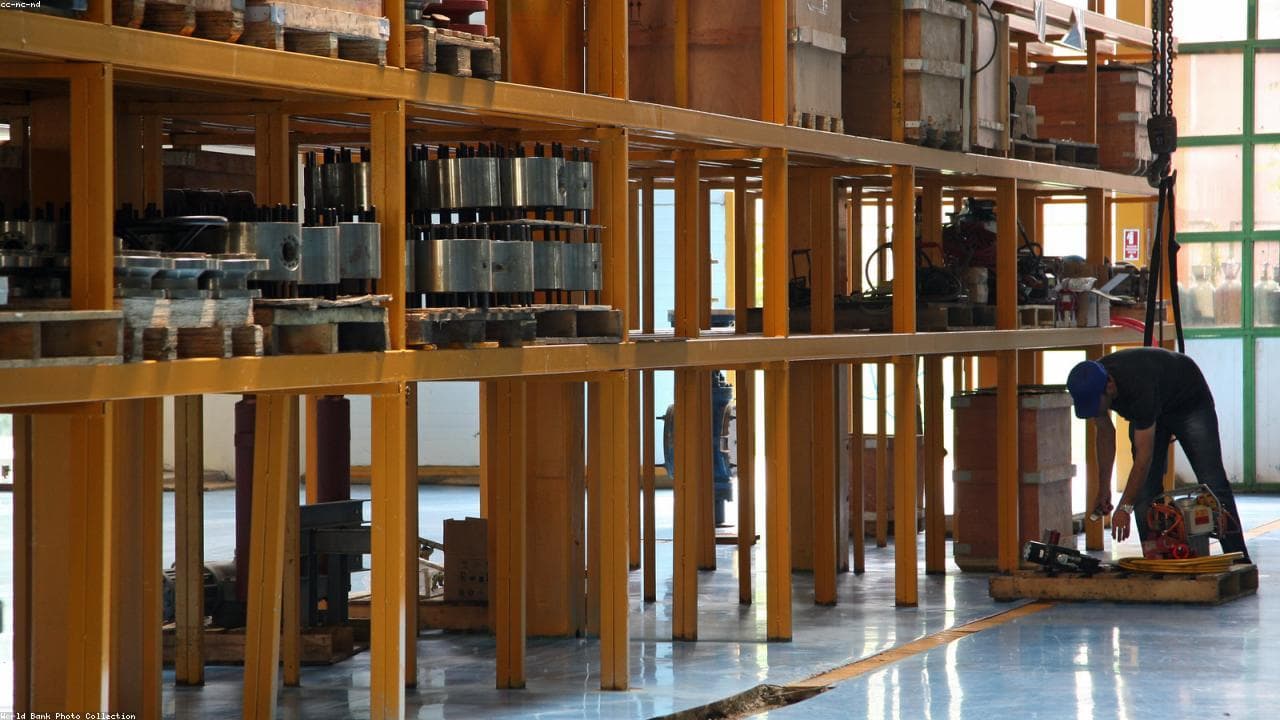
Earthing & Bonding drills for chemicals in Vadodara.
Book a walkthrough or start a focused pilot on your site.