

Hazardous Materials Handling VR training for chemicals in Vadodara.
Vadodara, Gujarat — petrochemicals and engineering hub (the Vadodara–Ankleshwar chemical corridor). Train safe receipt, storage, transfer and segregation of hazardous materials in a virtual store before anyone moves a real drum.
Hazardous Materials Handling VR training for chemicals in Vadodara
DrillXR Hazardous Materials Handling puts a trainee inside a virtual store and process area where every drum, sack and carboy carries a real consequence if it is handled wrongly. The simulation reproduces the hazards that turn routine handling into an incident: incompatible materials stored together and reacting, toxic or corrosive exposure during a transfer, leaks and ruptures from a damaged container, and the wrong PPE selected for the substance in hand. Inside the headset the worker identifies the material from its safety data sheet and label, selects PPE matched to that specific hazard, checks segregation and storage compatibility before placing anything, transfers with spill containment ready, and documents, secures and reports the task. Because the correct PPE and the correct storage depend entirely on what the substance is, the headset trains the identify-first discipline rather than a one-size checklist.
Hazardous-material work punishes assumption, and India's framework is correspondingly strict. The Manufacture, Storage and Import of Hazardous Chemicals (MSIHC) Rules 1989 govern how dangerous substances are stored, handled and managed, the Factories Act 1948 carries the underlying duty of care for anyone handling dangerous substances on the premises, and the site material-handling and on-site emergency plan defines how a release is contained and reported. The dangerous habit is not ignorance but familiarity: stacking an oxidiser next to a flammable because the rack had space, grabbing whatever gloves were nearest, or moving a leaking drum before reading what is in it. DrillXR lets a worker make and correct those mistakes in the headset, so the read-the-SDS, check-compatibility, contain-before-you-move habit is built before a real container is ever in their hands.
Hazardous Materials Handling training for Vadodara’s industrial base
Vadodara sits at the head of one of India's most important industrial arteries — the Vadodara–Ankleshwar chemical corridor that runs down Gujarat's golden belt. The city itself is a long-established petrochemicals and heavy-engineering centre, home to large public-sector and private chemical, fertiliser and engineering complexes, while the corridor stretching south through Nandesari, Dahej and Ankleshwar concentrates one of the densest collections of chemical and petrochemical processing in the country. This is continuous-process industry at scale: reactors, pressure vessels, bulk storage, pipelines and the hazardous chemistry that runs through them, much of it classified under Major Accident Hazard rules.
On the Vadodara–Ankleshwar corridor the highest-consequence events — a confined-space fatality during a vessel entry, a toxic or H2S release, a hot-work fire, a slow emergency response — are exactly the ones that are too dangerous to practise on the real asset. That is the core case for VR. DrillXR lets a worker rehearse atmospheric testing and permit-to-work before entering a vessel, practise containment and decontamination for a specific release, and run a timed, role-based emergency drill where team coordination is scored. For MAH units whose on-site emergency plans must be demonstrably and repeatedly tested, immersive drills produce a defensible competence record that a classroom and a signed register cannot. On a corridor this hazardous and this scrutinised, reproducible proof of competence is not optional.
Inside a hazardous materials handling drill
The session opens in a virtual hazardous-materials store with a receipt-and-transfer task. The trainee's first duty is to identify the material from its label and safety data sheet, learning its hazards and the protection it demands rather than handling it blind. Guided by the SDS, they select and don PPE appropriate to that substance; choose protection that does not match the hazard and the simulation registers an exposure. Before placing the container they check segregation and storage compatibility, and shelving an oxidiser beside a flammable or an acid beside a base is flagged. They then carry out the transfer with spill-containment equipment staged and a drain closed, so a leak is caught rather than spreading. The run finishes as the worker secures the containers, completes the documentation and reports the task and any defect found.
Chemicals risk in focus
Chemical-sector failure modes are process-safety driven and high-consequence. Toxic release — loss of containment of a hazardous substance — threatens workers on site and populations beyond the fence line, and demands instant correct PPE, containment and reporting. Runaway reactions, where exothermic processes exceed control, can rupture vessels and trigger fire or explosion. Confined-space entry into reactors, vessels and sumps combines toxic-atmosphere, residual-chemical and entrapment hazards. Fire and explosion from flammable inventories complete the profile. Each of these escalates in seconds and turns entirely on whether trained crews execute the right procedure under acute stress.
Go deeper on the Hazardous Materials Handling module, VR training for chemicals, or all training in Vadodara.
The hazards drilled
- incompatible-material storage & reaction
- toxic or corrosive exposure during transfer
- drum/container leaks and rupture
- wrong PPE for the substance handled
Chemicals risks in Vadodara
- toxic release
- runaway reactions
- confined space
- fire/explosion
The scored procedure
- 01Identify the material from the SDS and label
- 02Select PPE matched to the hazard
- 03Check segregation and storage compatibility
- 04Transfer with spill containment ready
- 05Document, secure and report
Compliance mapping
Related drills for chemicals
Explore the Hazardous Materials Handling module, VR training for chemicals, or all training in Vadodara.
Hazardous Materials Handling VR training in Vadodara — FAQs
Why run hazardous materials handling VR training for chemicals in Vadodara?
Vadodara is petrochemicals and engineering hub (the Vadodara–Ankleshwar chemical corridor). Chemicals teams there face toxic release, runaway reactions, confined space. DrillXR lets crews rehearse hazardous materials handling safely and repeatably, with scored, audit-ready evidence.
What does the Hazardous Materials Handling simulation cover?
Train safe receipt, storage, transfer and segregation of hazardous materials in a virtual store before anyone moves a real drum. It reproduces incompatible-material storage & reaction, toxic or corrosive exposure during transfer, drum/container leaks and rupture.
Which regulations apply?
Manufacture, Storage & Import of Hazardous Chemicals (MSIHC) Rules 1989; Factories Act 1948 (handling of dangerous substances); site material-handling & on-site emergency plan; MSIHC Rules; Factories Act 1948 (MAH units); PESO.
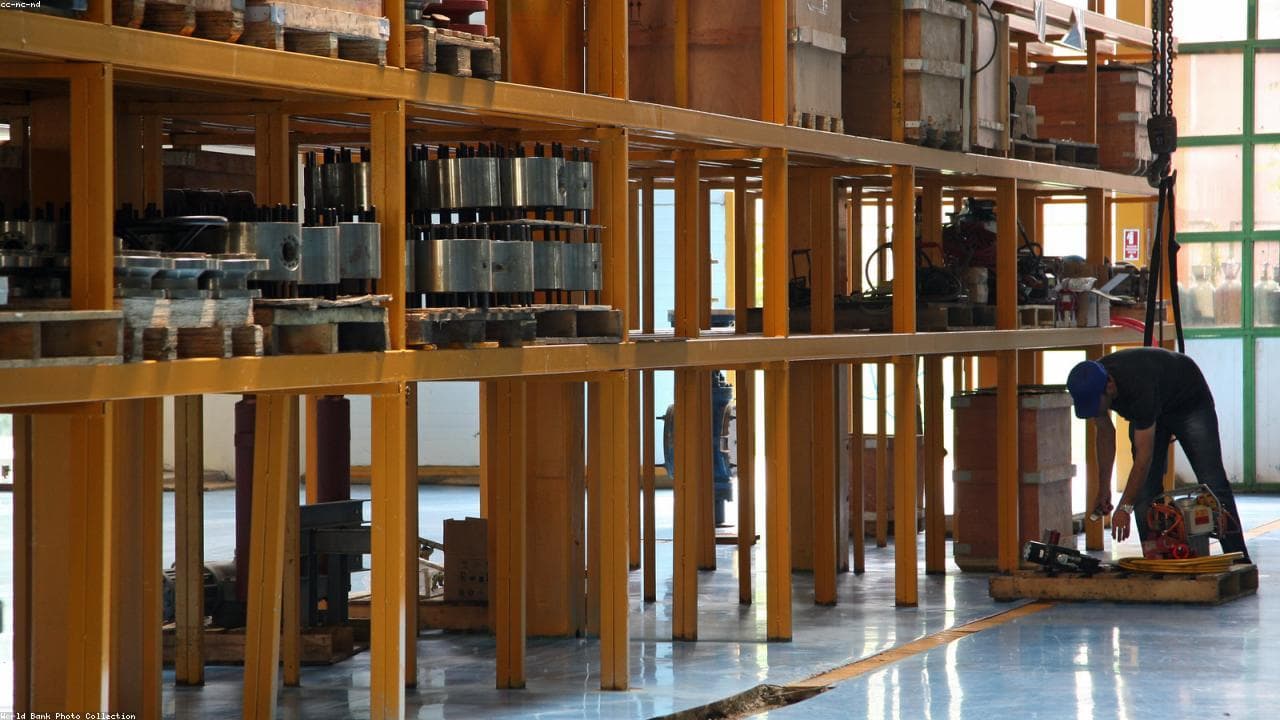
Hazardous Materials Handling drills for chemicals in Vadodara.
Book a walkthrough or start a focused pilot on your site.