

Hazard Identification & Risk Assessment (HIRA) VR training for construction in Vadodara.
Vadodara, Gujarat — petrochemicals and engineering hub (the Vadodara–Ankleshwar chemical corridor). Practise spotting hazards, assessing risk and selecting controls on a walk-through of a virtual plant, building the eye for hazards a checklist alone cannot teach.
Hazard Identification & Risk Assessment (HIRA) VR training for construction in Vadodara
DrillXR Hazard Identification and Risk Assessment trains the single most transferable safety skill, the ability to look at a workplace and actually see its hazards, on a walk-through of a virtual plant. The simulation reproduces the failures that undermine real risk assessment: hazards that go unrecognised because they have been normalised, likelihood or severity that is underestimated, controls chosen out of hierarchy order, and residual risk that is left unmanaged after the obvious step is taken. The trainee works the HIRA procedure, walking the area and identifying the hazards present, assessing the likelihood and severity of each, ranking the risks to prioritise them, selecting controls in line with the hierarchy of control, and recording findings and assigning actions. Because hazard perception is a trained eye rather than a memorised list, the headset is built to develop that eye in a realistic, consequence-free setting.
Risk assessment is the foundation that every other control sits on, and a flawed HIRA propagates danger through everything downstream. The Factories Act 1948 places occupier duties to provide and maintain safe systems of work, which assumes hazards have been identified and assessed, a site HIRA or risk-assessment procedure formalises how that assessment is done and recorded, and the BOCW Act 1996 carries the equivalent obligation across construction sites. The common failure is not a missing form but a workforce that has stopped noticing the hazard they pass every day, or an assessor who reaches for PPE when elimination or engineering control was available. DrillXR puts the trainee into a plant seeded with real hazards and scores whether they spot them, rank them honestly and choose controls in the right order, building the discipline a blank template cannot.
Hazard Identification & Risk Assessment (HIRA) training for Vadodara’s industrial base
Vadodara sits at the head of one of India's most important industrial arteries — the Vadodara–Ankleshwar chemical corridor that runs down Gujarat's golden belt. The city itself is a long-established petrochemicals and heavy-engineering centre, home to large public-sector and private chemical, fertiliser and engineering complexes, while the corridor stretching south through Nandesari, Dahej and Ankleshwar concentrates one of the densest collections of chemical and petrochemical processing in the country. This is continuous-process industry at scale: reactors, pressure vessels, bulk storage, pipelines and the hazardous chemistry that runs through them, much of it classified under Major Accident Hazard rules.
On the Vadodara–Ankleshwar corridor the highest-consequence events — a confined-space fatality during a vessel entry, a toxic or H2S release, a hot-work fire, a slow emergency response — are exactly the ones that are too dangerous to practise on the real asset. That is the core case for VR. DrillXR lets a worker rehearse atmospheric testing and permit-to-work before entering a vessel, practise containment and decontamination for a specific release, and run a timed, role-based emergency drill where team coordination is scored. For MAH units whose on-site emergency plans must be demonstrably and repeatedly tested, immersive drills produce a defensible competence record that a classroom and a signed register cannot. On a corridor this hazardous and this scrutinised, reproducible proof of competence is not optional.
Inside a hazard identification & risk assessment (hira) drill
The session places the trainee at the entrance to a virtual plant area with a brief to carry out a risk assessment. They walk the area and identify the hazards present, a hazard missed reduces their score while a false alarm on a controlled item is noted; the scene is seeded with the kind of normalised hazards a familiar eye overlooks. For each hazard they assess likelihood and severity, and the simulation challenges an assessor who downplays a low-frequency, high-consequence risk. They rank the risks to prioritise the most serious, then select controls by the hierarchy, and choosing PPE where elimination or an engineering control was available is scored as a weaker answer. Finally they record their findings and assign actions with owners, completing the assessment as a usable document rather than an abandoned form. Missed hazards, mis-ranked risks and out-of-hierarchy controls all register against the result.
Construction risk in focus
Construction fatalities are overwhelmingly concentrated in a handful of mechanisms. Falls from height — off scaffolds, edges, ladders and fragile roofs — are the single largest killer, usually traced to missing or misused fall-arrest equipment and wrong anchor selection. Lifting operations cause struck-by and crushing injuries when loads, exclusion zones and signalling are mismanaged. Excavation collapse buries workers in unsupported or wrongly battered trenches. Site-traffic incidents arise where plant, delivery vehicles and people share congested ground. These are split-second, physical failures that no written test can certify a worker against.
Go deeper on the Hazard Identification & Risk Assessment (HIRA) module, VR training for construction, or all training in Vadodara.
The hazards drilled
- unrecognised or normalised hazards
- underestimated likelihood or severity
- controls chosen out of hierarchy order
- residual risk left unmanaged
Construction risks in Vadodara
- falls from height
- lifting operations
- excavation collapse
- site-traffic
The scored procedure
- 01Walk the area and identify the hazards
- 02Assess likelihood and severity
- 03Rank risk and prioritise
- 04Select controls by the hierarchy
- 05Record findings and assign actions
Compliance mapping
Related drills for construction
Explore the Hazard Identification & Risk Assessment (HIRA) module, VR training for construction, or all training in Vadodara.
Hazard Identification & Risk Assessment (HIRA) VR training in Vadodara — FAQs
Why run hazard identification & risk assessment (hira) VR training for construction in Vadodara?
Vadodara is petrochemicals and engineering hub (the Vadodara–Ankleshwar chemical corridor). Construction teams there face falls from height, lifting operations, excavation collapse. DrillXR lets crews rehearse hazard identification & risk assessment (hira) safely and repeatably, with scored, audit-ready evidence.
What does the Hazard Identification & Risk Assessment (HIRA) simulation cover?
Practise spotting hazards, assessing risk and selecting controls on a walk-through of a virtual plant, building the eye for hazards a checklist alone cannot teach. It reproduces unrecognised or normalised hazards, underestimated likelihood or severity, controls chosen out of hierarchy order.
Which regulations apply?
Factories Act 1948 (occupier duties & safe systems of work); site HIRA / risk-assessment procedure; BOCW Act 1996 (construction risk assessment); BOCW Act 1996; Factories Act (off-site works); BIS IS 3764.
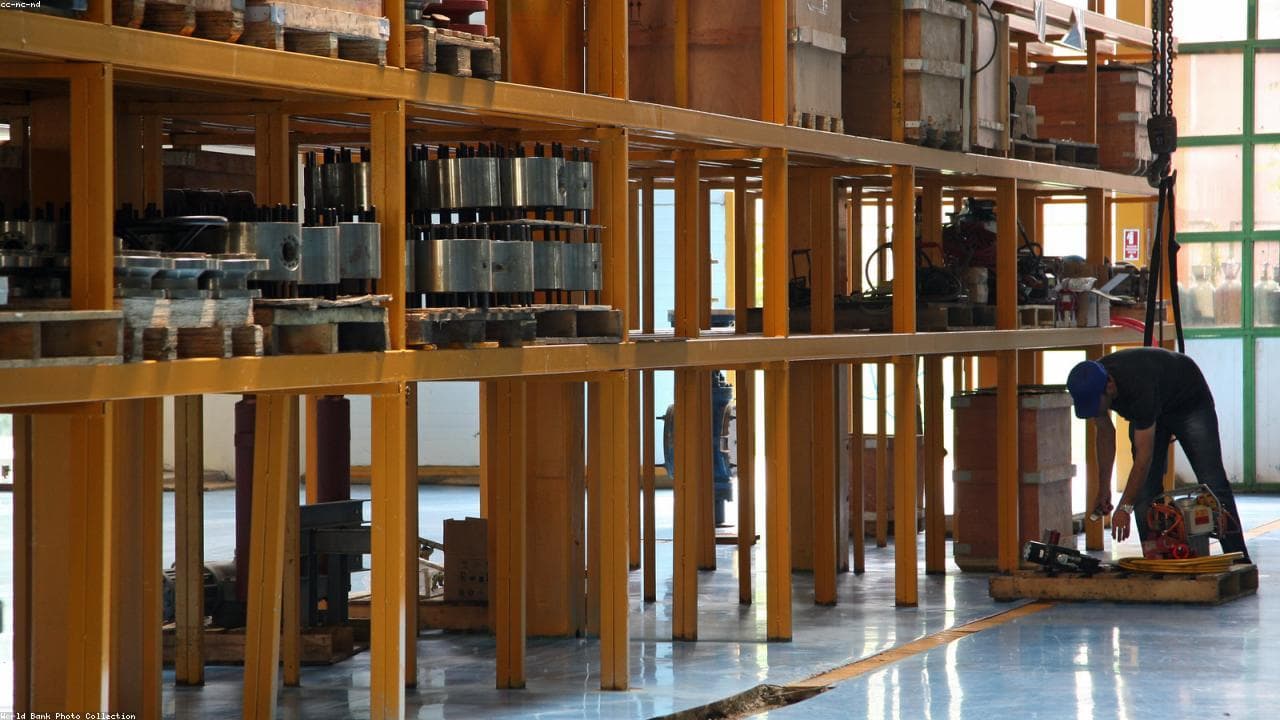
Hazard Identification & Risk Assessment (HIRA) drills for construction in Vadodara.
Book a walkthrough or start a focused pilot on your site.