

Conveyor Safety VR training for mining in Vadodara.
Vadodara, Gujarat — petrochemicals and engineering hub (the Vadodara–Ankleshwar chemical corridor). Train guarding awareness, pull-cord use and lock-and-verify-before-access on virtual conveyors before anyone reaches near a moving belt.
Conveyor Safety VR training for mining in Vadodara
DrillXR Conveyor Safety trains operators and maintenance staff to work safely around moving belts, where a reach toward a running conveyor can draw in a hand, a sleeve or worse in an instant. The simulation reproduces the mechanical hazards that maim around conveyors: entanglement at nip points where the belt meets a pulley or roller, clothing or a limb drawn in, falling material thrown from the belt, and the unexpected start that catches someone clearing a blockage. Inside the headset the worker identifies the guards, nip points and pull-cords, stops the conveyor and confirms it is at rest, locks and verifies before access, clears blockages or material safely, and re-guards and restarts with a warning to others. Because the lethal shortcut is reaching in to clear a jam on a live belt, the headset trains the stop-isolate-verify-access discipline that production pressure erodes.
Conveyor injuries are often catastrophic and frequently trace back to clearing a blockage without stopping and isolating the belt. India's framework carries the duty: the Factories Act 1948 requires the fencing of dangerous machinery under Section 21, the Mines Act 1952 and DGMS guidance govern conveyors in mining operations, and a conveyor safe-operating procedure sets out safe access and isolation for each installation. The dangerous habit is not ignorance but familiarity: reaching past a guard to free a stuck product because stopping the line costs time, or trusting a belt is stopped without locking it off. A classroom cannot let a worker feel a belt draw a hand in; DrillXR lets them take that shortcut in the headset and feel the consequence of an unexpected start, building the never-reach-into-a-live-conveyor instinct before a real belt tests it.
Conveyor Safety training for Vadodara’s industrial base
Vadodara sits at the head of one of India's most important industrial arteries — the Vadodara–Ankleshwar chemical corridor that runs down Gujarat's golden belt. The city itself is a long-established petrochemicals and heavy-engineering centre, home to large public-sector and private chemical, fertiliser and engineering complexes, while the corridor stretching south through Nandesari, Dahej and Ankleshwar concentrates one of the densest collections of chemical and petrochemical processing in the country. This is continuous-process industry at scale: reactors, pressure vessels, bulk storage, pipelines and the hazardous chemistry that runs through them, much of it classified under Major Accident Hazard rules.
On the Vadodara–Ankleshwar corridor the highest-consequence events — a confined-space fatality during a vessel entry, a toxic or H2S release, a hot-work fire, a slow emergency response — are exactly the ones that are too dangerous to practise on the real asset. That is the core case for VR. DrillXR lets a worker rehearse atmospheric testing and permit-to-work before entering a vessel, practise containment and decontamination for a specific release, and run a timed, role-based emergency drill where team coordination is scored. For MAH units whose on-site emergency plans must be demonstrably and repeatedly tested, immersive drills produce a defensible competence record that a classroom and a signed register cannot. On a corridor this hazardous and this scrutinised, reproducible proof of competence is not optional.
Inside a conveyor safety drill
The trainee approaches a virtual conveyor with material to manage and a blockage developing. They begin by identifying the guards, the nip points where the belt meets pulleys and rollers, and the emergency pull-cords running alongside the belt. As material jams, the classic temptation is to reach in and free it on the move; the correct path is to stop the conveyor, using the pull-cord or stop control, and confirm it has come fully to rest rather than acting while it still runs. The trainee then locks and verifies before access, proving the belt cannot start, and only then clears the blockage or fallen material safely. Reach in without stopping and isolating, and the simulation demonstrates the belt drawing them into the nip point. With the blockage cleared, the worker re-guards every guard they opened and restarts the conveyor with an audible warning to anyone nearby.
Mining risk in focus
Mining's failure modes are dominated by atmosphere and movement. Confined-space and gas hazards — oxygen deficiency, methane or other toxic accumulations in headings, bunkers and sumps — kill quickly and often claim would-be rescuers too. Heavy-vehicle interaction on surface operations, where dumpers and shovels share ground with light vehicles and people in poor visibility, is a persistent cause of fatalities. Rockfall and ground failure remain ever-present underground, and when an incident does escalate, a disorganised or delayed emergency egress is what turns a survivable event into a multiple-fatality disaster. Each of these is a coordination and procedure problem that a written exam cannot validate.
Go deeper on the Conveyor Safety module, VR training for mining, or all training in Vadodara.
The hazards drilled
- entanglement at nip points & pulleys
- drawn-in clothing or limbs
- falling material from the belt
- unexpected start during clearing
Mining risks in Vadodara
- confined space & gas hazards
- heavy-vehicle interaction
- rockfall
- emergency egress
The scored procedure
- 01Identify guards, nip points and pull-cords
- 02Stop the conveyor and confirm it is at rest
- 03Lock and verify before access
- 04Clear blockages or material safely
- 05Re-guard and restart with warning
Compliance mapping
Related drills for mining
Explore the Conveyor Safety module, VR training for mining, or all training in Vadodara.
Conveyor Safety VR training in Vadodara — FAQs
Why run conveyor safety VR training for mining in Vadodara?
Vadodara is petrochemicals and engineering hub (the Vadodara–Ankleshwar chemical corridor). Mining teams there face confined space & gas hazards, heavy-vehicle interaction, rockfall. DrillXR lets crews rehearse conveyor safety safely and repeatably, with scored, audit-ready evidence.
What does the Conveyor Safety simulation cover?
Train guarding awareness, pull-cord use and lock-and-verify-before-access on virtual conveyors before anyone reaches near a moving belt. It reproduces entanglement at nip points & pulleys, drawn-in clothing or limbs, falling material from the belt.
Which regulations apply?
Factories Act 1948 (fencing of machinery, Section 21); Mines Act 1952 / DGMS (conveyors in mines); conveyor safe-operating procedure; Mines Act 1952; DGMS circulars; Mines Rules / Vocational Training Rules.
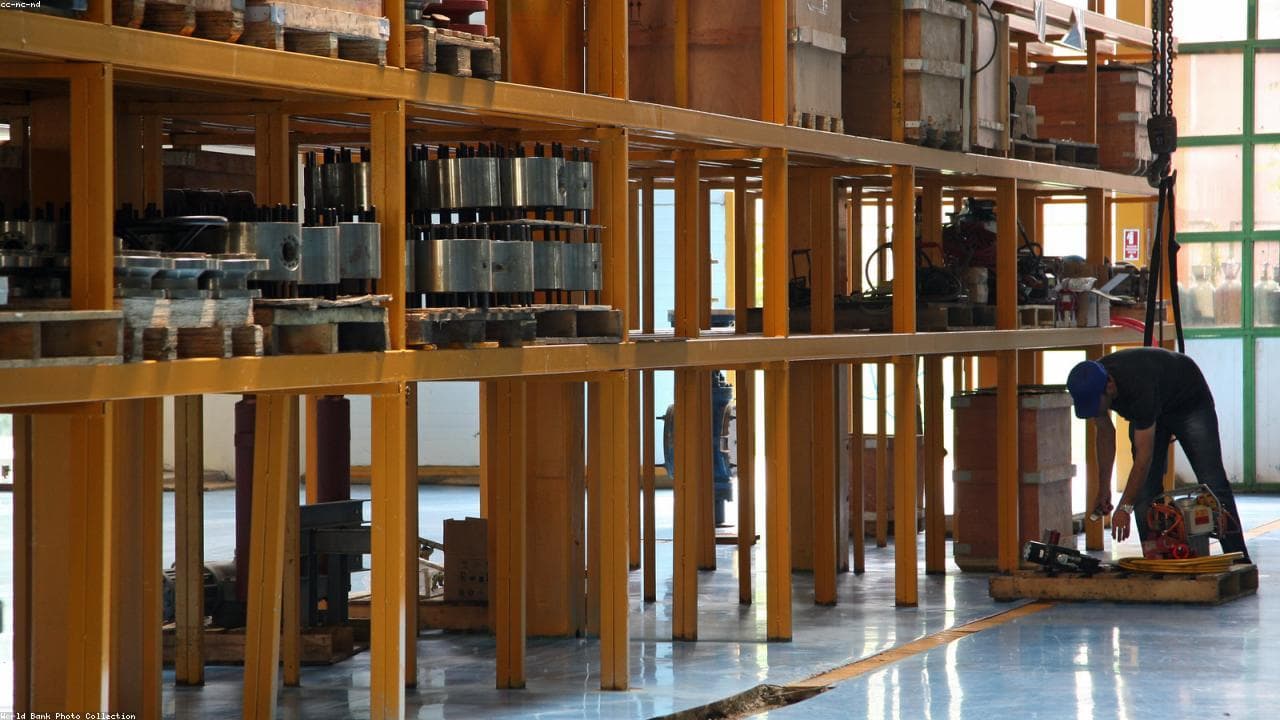
Conveyor Safety drills for mining in Vadodara.
Book a walkthrough or start a focused pilot on your site.