

Welding Fume & Occupational Health VR training for manufacturing in Vadodara.
Vadodara, Gujarat — petrochemicals and engineering hub (the Vadodara–Ankleshwar chemical corridor). Train welders and supervisors to control welding fume at source with extraction, ventilation and RPE before the long-term health damage is done.
Welding Fume & Occupational Health VR training for manufacturing in Vadodara
DrillXR Welding Fume and Occupational Health trains the hazard that does its damage slowly and invisibly, so a welder controls the fume long before it shows up as lung disease. The simulation reproduces the failures that cause overexposure: inhaling welding fume and metal oxides shift after shift, the far more hazardous fume released when welding coated, galvanised or stainless materials, inadequate local exhaust ventilation or poor general ventilation that lets fume linger in the breathing zone, and incorrect or absent respiratory protective equipment. Inside the headset the trainee identifies the metal, the coating and the fume hazard before striking an arc, positions local exhaust ventilation at the fume source, confirms the general ventilation or enclosure is adequate, selects and fits the correct RPE, and verifies capture while reviewing exposure and health surveillance. The habit being built is control the fume at source first, and protect the breathing zone, not just complete the weld.
Welding fume is a recognised occupational-health hazard and the harm is cumulative, which is exactly why it gets ignored, the welder feels nothing today. The Factories Act 1948 carries duties to control dust and fume and treats work generating hazardous fume as a process to be controlled, and its occupational-health and medical-examination provisions support health surveillance of exposed workers; every responsible fabrication shop runs a welding-fume control and health-surveillance standard operating procedure. The classic failure is not ignorance but routine: a welder who never positions the extraction because the weld can be made without it, or who welds galvanised steel without realising the coating releases a far more hazardous fume. A classroom briefing on ventilation is forgotten by the next job; DrillXR rebuilds the control-at-source habit repeatedly and assessably, so positioning the extraction becomes part of setting up the weld.
Welding Fume & Occupational Health training for Vadodara’s industrial base
Vadodara sits at the head of one of India's most important industrial arteries — the Vadodara–Ankleshwar chemical corridor that runs down Gujarat's golden belt. The city itself is a long-established petrochemicals and heavy-engineering centre, home to large public-sector and private chemical, fertiliser and engineering complexes, while the corridor stretching south through Nandesari, Dahej and Ankleshwar concentrates one of the densest collections of chemical and petrochemical processing in the country. This is continuous-process industry at scale: reactors, pressure vessels, bulk storage, pipelines and the hazardous chemistry that runs through them, much of it classified under Major Accident Hazard rules.
On the Vadodara–Ankleshwar corridor the highest-consequence events — a confined-space fatality during a vessel entry, a toxic or H2S release, a hot-work fire, a slow emergency response — are exactly the ones that are too dangerous to practise on the real asset. That is the core case for VR. DrillXR lets a worker rehearse atmospheric testing and permit-to-work before entering a vessel, practise containment and decontamination for a specific release, and run a timed, role-based emergency drill where team coordination is scored. For MAH units whose on-site emergency plans must be demonstrably and repeatedly tested, immersive drills produce a defensible competence record that a classroom and a signed register cannot. On a corridor this hazardous and this scrutinised, reproducible proof of competence is not optional.
Inside a welding fume & occupational health drill
A session places the trainee at a welding workstation with a job to complete. They begin by identifying the metal, any coating and the fume hazard, and welding a galvanised or stainless material without recognising the heightened hazard costs against the score. They position the local exhaust ventilation at the fume source, close to the arc rather than vaguely nearby, and the simulation shows whether the plume is actually captured. They confirm the general ventilation or enclosure is adequate for the work, rather than relying on extraction alone in a confined bay. They select and fit the correct respiratory protective equipment for the fume, and the run rewards a proper fit-check. As the trainee welds, the scenario shows the fume behaviour, and a mispositioned extraction or absent RPE lets the plume reach the breathing zone, registering against the result. The run closes as the trainee verifies capture and reviews the exposure and health-surveillance position rather than treating the weld as finished at the last pass.
Manufacturing risk in focus
Manufacturing incidents cluster around a few recurring failure modes. Machine entanglement and nip-point injuries happen when guards are defeated or a machine is accessed before it reaches a true zero-energy state. Material-handling incidents — forklift-pedestrian strikes, load tip-overs, racking collisions — dominate the lost-time statistics on busy shop floors. Fire, from electrical faults, hot work or solvent storage, can move faster than an untrained crew can react, and a poorly rehearsed line-side evacuation turns a containable event into a mass-casualty one. The common thread is that each of these is a procedural failure under pressure, not a knowledge gap a worker can talk their way through on a written test.
Go deeper on the Welding Fume & Occupational Health module, VR training for manufacturing, or all training in Vadodara.
The hazards drilled
- inhalation of welding fume and metal oxides
- exposure to hazardous fume from coated, galvanised or stainless materials
- inadequate local exhaust ventilation or general ventilation
- incorrect or no respiratory protective equipment
Manufacturing risks in Vadodara
- machine entanglement
- material-handling incidents
- fire
- line-side evacuation
The scored procedure
- 01Identify the metal, coating and fume hazard before welding
- 02Position local exhaust ventilation at the fume source
- 03Confirm general ventilation or enclosure adequacy
- 04Select and fit the correct respiratory protective equipment
- 05Verify capture and review exposure and health surveillance
Compliance mapping
Related drills for manufacturing
Explore the Welding Fume & Occupational Health module, VR training for manufacturing, or all training in Vadodara.
Welding Fume & Occupational Health VR training in Vadodara — FAQs
Why run welding fume & occupational health VR training for manufacturing in Vadodara?
Vadodara is petrochemicals and engineering hub (the Vadodara–Ankleshwar chemical corridor). Manufacturing teams there face machine entanglement, material-handling incidents, fire. DrillXR lets crews rehearse welding fume & occupational health safely and repeatably, with scored, audit-ready evidence.
What does the Welding Fume & Occupational Health simulation cover?
Train welders and supervisors to control welding fume at source with extraction, ventilation and RPE before the long-term health damage is done. It reproduces inhalation of welding fume and metal oxides, exposure to hazardous fume from coated, galvanised or stainless materials, inadequate local exhaust ventilation or general ventilation.
Which regulations apply?
Factories Act 1948 (control of dust, fume and hazardous-process health duties); Factories Act 1948 (occupational health and medical examination provisions); site welding-fume control and health-surveillance standard operating procedure; Factories Act 1948; BIS machinery standards; state Factory Inspectorate.
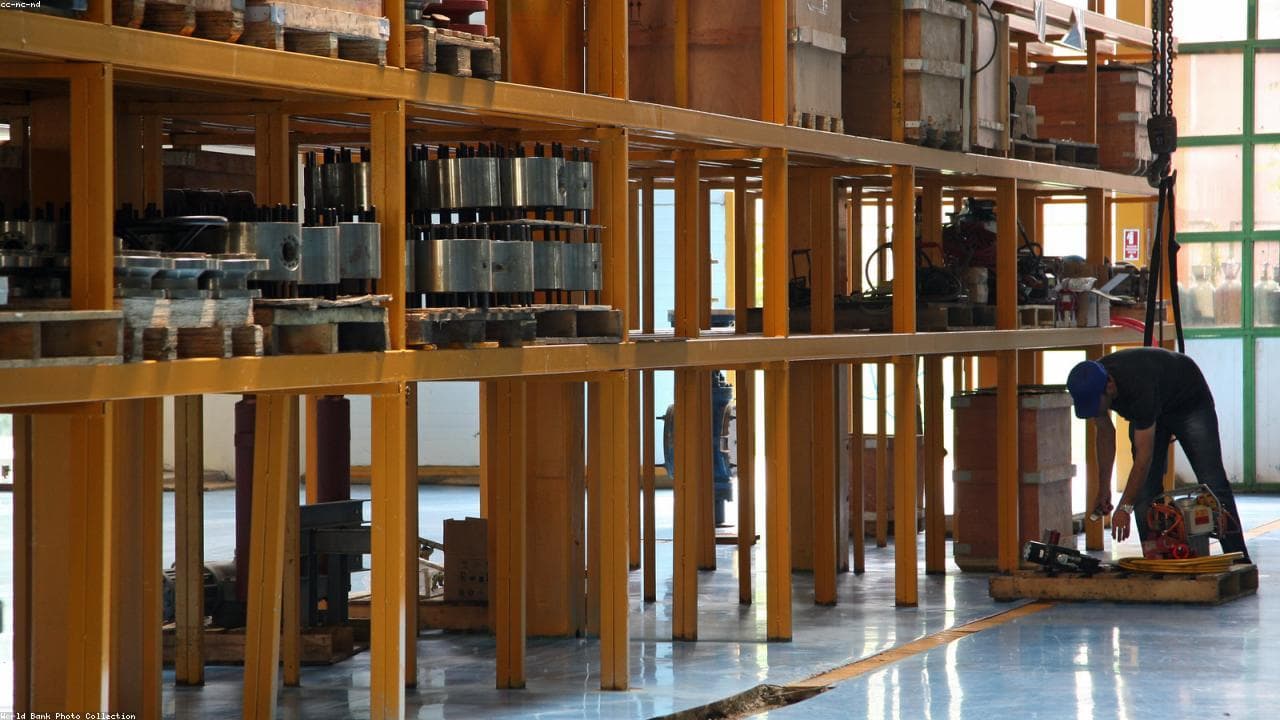
Welding Fume & Occupational Health drills for manufacturing in Vadodara.
Book a walkthrough or start a focused pilot on your site.