

Combustible Dust & Explosion VR training for steel in Visakhapatnam.
Visakhapatnam, Andhra Pradesh — steel, port and petrochemicals hub (the Visakhapatnam port and petro cluster). Rehearse housekeeping, ignition-source control and dust-accumulation recognition in a virtual plant so workers break the explosion pentagon before it forms.
Combustible Dust & Explosion VR training for steel in Visakhapatnam
DrillXR Combustible Dust and Explosion trains workers to recognise and break up the conditions that lead to a dust explosion before they ever combine. The simulation reproduces the hazards behind these incidents: combustible dust accumulating on ledges and surfaces until a disturbance throws it into a cloud, ignition sources present in a dusty area, dust-extraction and deflagration controls defeated or neglected, and hot work carried out in an unswept space. Inside the headset the worker recognises the dust hazard and its accumulation, controls ignition sources in the area, maintains the extraction and dust-collection systems, applies safe housekeeping and cleaning, and controls hot work and reports hazards. Because a dust explosion needs fuel, oxygen, dispersion, confinement and an ignition source together, the headset trains the worker to see and remove the elements of that pentagon rather than treating loose dust as merely untidy.
Combustible-dust incidents are devastating and often involve a small primary event that disturbs settled dust and triggers a far larger secondary explosion. India's framework treats explosive atmospheres seriously: the Factories Act 1948 carries duties around dangerous dusts and explosive atmospheres on the premises, the Manufacture, Storage and Import of Hazardous Chemicals (MSIHC) Rules 1989 govern the wider hazardous-substance regime, and the site dust-control and on-site emergency plan defines how accumulation is managed and how an event is responded to. The dangerous habit is not ignorance but normalisation: dust on a beam is seen every day and stops registering as fuel, an extraction system runs degraded, or a grinder is used in an unswept corner. DrillXR lets a worker see settled dust become a cloud and ignite in the headset, building the housekeeping-and-ignition-control instinct before a real cloud forms.
Combustible Dust & Explosion training for Visakhapatnam’s industrial base
Visakhapatnam is the industrial and maritime anchor of Andhra Pradesh, where a major deep-water port, integrated steel production and a cluster of petrochemical and process industries converge on the coast. The Visakhapatnam port — one of India's largest by cargo — drives bulk handling, container operations and terminal logistics, while the integrated steel plant and the surrounding petrochemical, refining and chemical units make the city a heavy-process hub. This combination of port operations and continuous-process industry gives Vizag a distinctive dual hazard profile: dockside lifting, traffic and confined holds on one side, and process-safety, confined vessels and hot work on the other.
Vizag's blend of port and heavy-process industry concentrates hazards that are both varied and severe: a lifting failure or hold entry at the port, a confined-vessel entry or hot-metal incident at the steel plant, a process-safety or fire event in the petro cluster. These cannot be safely staged on the real asset, and a workforce split across docks, mills and process units needs more than a generic classroom briefing. VR delivers targeted, assessed rehearsal. A dock worker can practise safe lifting and confined-hold entry, a steel operator machine isolation, and a process technician spill response and emergency coordination — each scored on every attempt. For MAH petro units and port operators answering to several regulators at once, that immersive, reproducible competence record is the strongest, most defensible evidence available.
Inside a combustible dust & explosion drill
The session places the trainee in a virtual plant area where combustible dust is generated and can settle. They begin by recognising the dust hazard, identifying where dust has accumulated on ledges, beams and equipment and understanding it as fuel rather than mess. They control ignition sources in the area, and using or permitting an ignition source near accumulated dust is flagged, with the simulation able to demonstrate the cloud and the explosion that follows a disturbance. They check the extraction and dust-collection system is running and effective, and a defeated or degraded control is registered. They then apply safe housekeeping, cleaning by methods that do not throw dust into suspension. Tasked with a hot-work need, they must control it, refusing hot work in an unswept area until the accumulation is cleared. The run closes once the hazard is recognised, ignition controlled, extraction confirmed and the area cleaned and reported.
Steel risk in focus
Steel's failure modes are defined by heat, mass and gas. Molten-metal and hot-work hazards — splashes, runouts and water-metal explosions — produce catastrophic burns and are the sector's most feared events. Crane and material-handling operations move enormous loads over crews, where a rigging error or exclusion-zone breach is instantly fatal. Machine-safety failures on mills, conveyors and shears cause entanglement and crushing, especially during maintenance access. And gas hazards from CO and blast-furnace gas threaten asphyxiation across the plant. Each is a high-energy, low-margin event that procedural discipline — performed correctly every time — is the only reliable defence against.
Go deeper on the Combustible Dust & Explosion module, VR training for steel, or all training in Visakhapatnam.
The hazards drilled
- combustible dust accumulation & secondary explosions
- ignition sources in dusty areas
- defeated dust-extraction & deflagration controls
- hot work in unswept areas
Steel risks in Visakhapatnam
- molten metal & hot work
- crane/material handling
- machine safety
- gas hazards
The scored procedure
- 01Recognise the dust hazard and accumulation
- 02Control ignition sources in the area
- 03Maintain extraction and dust-collection
- 04Apply safe housekeeping and cleaning
- 05Control hot work and report hazards
Compliance mapping
Related drills for steel
Explore the Combustible Dust & Explosion module, VR training for steel, or all training in Visakhapatnam.
Combustible Dust & Explosion VR training in Visakhapatnam — FAQs
Why run combustible dust & explosion VR training for steel in Visakhapatnam?
Visakhapatnam is steel, port and petrochemicals hub (the Visakhapatnam port and petro cluster). Steel teams there face molten metal & hot work, crane/material handling, machine safety. DrillXR lets crews rehearse combustible dust & explosion safely and repeatably, with scored, audit-ready evidence.
What does the Combustible Dust & Explosion simulation cover?
Rehearse housekeeping, ignition-source control and dust-accumulation recognition in a virtual plant so workers break the explosion pentagon before it forms. It reproduces combustible dust accumulation & secondary explosions, ignition sources in dusty areas, defeated dust-extraction & deflagration controls.
Which regulations apply?
Factories Act 1948 (dangerous dusts & explosive atmospheres); Manufacture, Storage & Import of Hazardous Chemicals (MSIHC) Rules 1989; site dust-control & on-site emergency plan; Factories Act 1948; BIS standards; site safety SOPs.
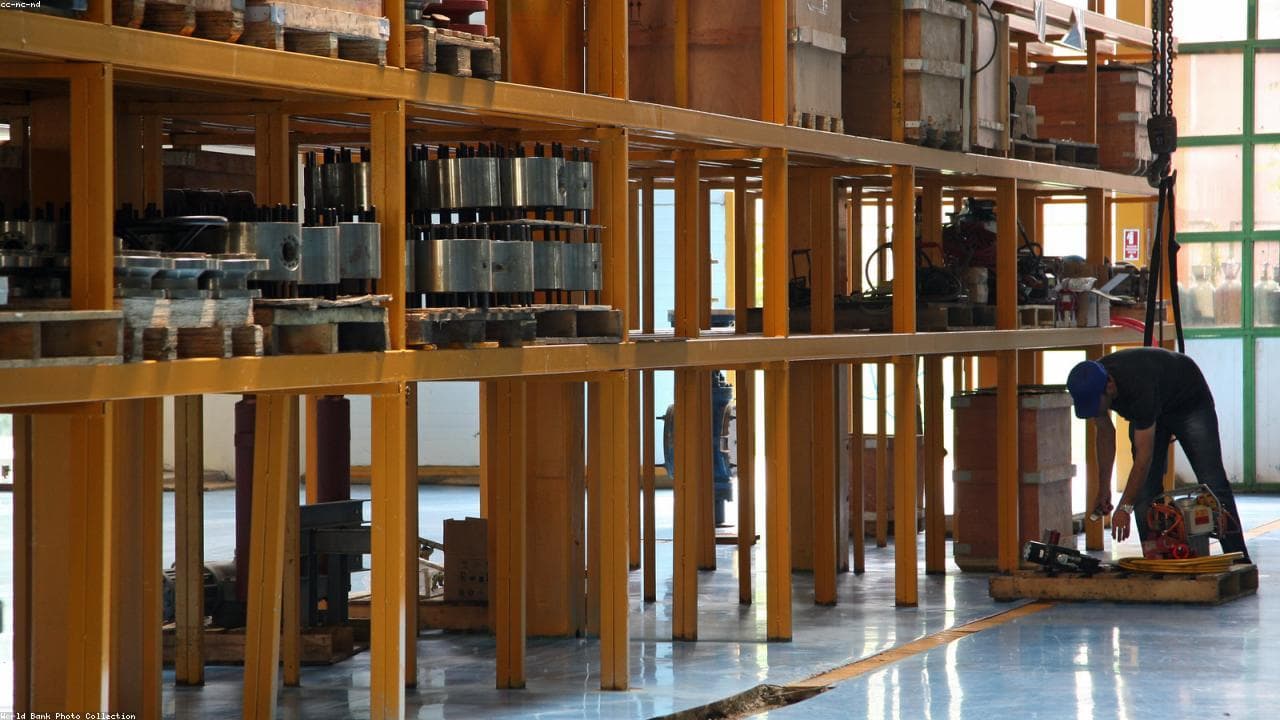
Combustible Dust & Explosion drills for steel in Visakhapatnam.
Book a walkthrough or start a focused pilot on your site.