

Loading Dock & Bay Safety VR training for ports & terminals in Bengaluru.
Bengaluru, Karnataka — aerospace, machinery and manufacturing hub (Peenya and Bommasandra industrial areas). Rehearse vehicle restraint, dock-edge discipline and pedestrian separation in a virtual loading bay before a trailer creep or a fall off the edge causes harm.
Loading Dock & Bay Safety VR training for ports & terminals in Bengaluru
DrillXR Loading Dock and Bay Safety trains dock staff, forklift operators and drivers to manage the loading bay, the busy, hazardous interface where vehicles, pedestrians and powered trucks meet at a raised edge. The simulation reproduces the hazards that cause dock incidents: falls from the dock edge into the gap or onto the ground below, trailer creep and early departure where a vehicle moves while a truck is still loading, forklift–pedestrian collisions in the congested bay, and the crush between a reversing vehicle and the dock face. Inside the headset the worker chocks and restrains the trailer, confirms the dock leveller and edge protection, separates pedestrians from vehicle movement, loads or unloads within safe limits, and releases the vehicle and signals its departure. Because most dock incidents come from a vehicle moving when it should be held, the headset trains the restrain-confirm-separate discipline that a rushed turnaround abandons.
Loading docks concentrate vehicle and pedestrian traffic at a fall edge, which is why they produce so many serious incidents. India's framework sets the duty: the Factories Act 1948 covers site traffic and the safe movement of vehicles around workers, a site traffic-management plan governs how the bay is organised, and a loading-bay safe-operating procedure defines the restraint, signalling and separation controls. The dangerous failure is not ignorance but a turnaround taken too fast: a trailer not chocked, a driver who pulls away while a forklift is still on the trailer, or a pedestrian crossing the path of a reversing vehicle. A classroom cannot let a worker feel a trailer creep away under a loaded truck; DrillXR lets them make and correct that mistake in the headset, building the chock-and-confirm-before-you-load instinct before a real vehicle moves.
Loading Dock & Bay Safety training for Bengaluru’s industrial base
Beyond its software reputation, Bengaluru carries a substantial hard-manufacturing economy concentrated in the Peenya and Bommasandra industrial areas. Peenya, one of Asia's largest industrial estates, is a dense grid of machinery, machine-tool, electrical-equipment and precision-engineering units. Bommasandra to the south blends general manufacturing with pharma and electronics. Layered over this is Bengaluru's aerospace and defence manufacturing base — public-sector heavyweights and a growing private supplier ecosystem producing high-precision, high-consequence components. The city's industrial workforce is large, skilled and shift-based, spread across thousands of small and mid-sized units.
Bengaluru's machinery-heavy base makes machine-interaction the defining hazard: an unguarded nip point, a defeated interlock, or a machine that restarts during maintenance because isolation was incomplete. These failures are sudden and severe, and they are not reliably prevented by a slide deck. VR builds the right reflexes. In the headset an operator identifies guards and interlocks, confirms safe-stop, and practises lock-and-verify before access until the sequence is automatic — and the system scores every attempt. For Peenya's thousands of engineering units and Bommasandra's manufacturers, and especially for aerospace and defence suppliers whose customers demand documented competence, that assessed, repeatable record is far more credible than an attendance register. It also lets a multi-unit operator hold every site and every shift to the same measurable safety standard.
Inside a loading dock & bay safety drill
The session begins at a loading bay as a trailer arrives to be unloaded. The trainee first chocks and restrains the trailer, applying wheel chocks or the vehicle restraint and confirming the vehicle cannot move; skip the restraint and the simulation can demonstrate trailer creep while a forklift is on the trailer. They confirm the dock leveller is correctly positioned and the edge protection is in place before any movement onto the trailer, refusing to work an unprotected edge. They separate pedestrians from the vehicle and forklift movement, directing foot traffic clear of the operating area rather than letting it cross the path. Loading or unloading proceeds within safe limits, keeping the forklift stable and the load controlled. The run closes as the trainee confirms the trailer is clear of people and equipment, releases the restraint, and signals the driver that it is safe to depart.
Ports & Terminals risk in focus
Port failure modes are dominated by movement and enclosure. Lifting operations — quay and yard cranes handling containers and bulk over crews — cause struck-by and crushing injuries when exclusion zones, rigging or signalling fail. Vehicle and pedestrian traffic in busy terminal yards, where trailers, stackers and people intersect, is a persistent fatality source. Falls occur during work at height on cranes, container stacks and vessel access. And confined-space entry into ship holds and bulk-cargo spaces carries oxygen-deficiency and toxic-atmosphere hazards, including from the cargo itself. Each is a coordination-and-procedure failure in a space too crowded to leave to chance.
Go deeper on the Loading Dock & Bay Safety module, VR training for ports & terminals, or all training in Bengaluru.
The hazards drilled
- falls from the dock edge
- trailer creep & early departure
- forklift–pedestrian collisions
- crush between vehicle and dock
Ports & Terminals risks in Bengaluru
- lifting operations
- vehicle/pedestrian traffic
- falls
- confined space (holds)
The scored procedure
- 01Chock and restrain the trailer
- 02Confirm the dock leveller and edge protection
- 03Separate pedestrians from vehicle movement
- 04Load or unload within safe limits
- 05Release the vehicle and signal departure
Compliance mapping
Related drills for ports & terminals
Explore the Loading Dock & Bay Safety module, VR training for ports & terminals, or all training in Bengaluru.
Loading Dock & Bay Safety VR training in Bengaluru — FAQs
Why run loading dock & bay safety VR training for ports & terminals in Bengaluru?
Bengaluru is aerospace, machinery and manufacturing hub (Peenya and Bommasandra industrial areas). Ports & Terminals teams there face lifting operations, vehicle/pedestrian traffic, falls. DrillXR lets crews rehearse loading dock & bay safety safely and repeatably, with scored, audit-ready evidence.
What does the Loading Dock & Bay Safety simulation cover?
Rehearse vehicle restraint, dock-edge discipline and pedestrian separation in a virtual loading bay before a trailer creep or a fall off the edge causes harm. It reproduces falls from the dock edge, trailer creep & early departure, forklift–pedestrian collisions.
Which regulations apply?
Factories Act 1948 (site traffic & safe movement); site traffic-management plan; loading-bay safe-operating procedure; Dock Workers (Safety) Regulations; Factories Act; BIS lifting standards.
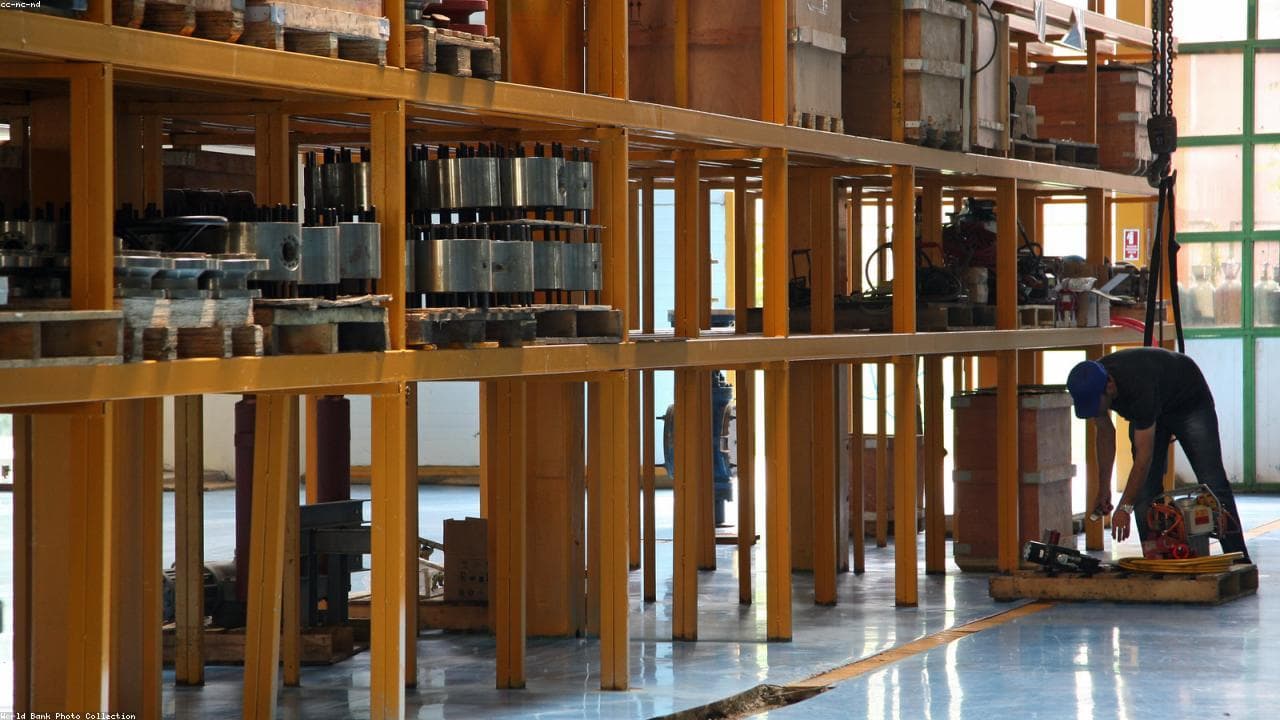
Loading Dock & Bay Safety drills for ports & terminals in Bengaluru.
Book a walkthrough or start a focused pilot on your site.